

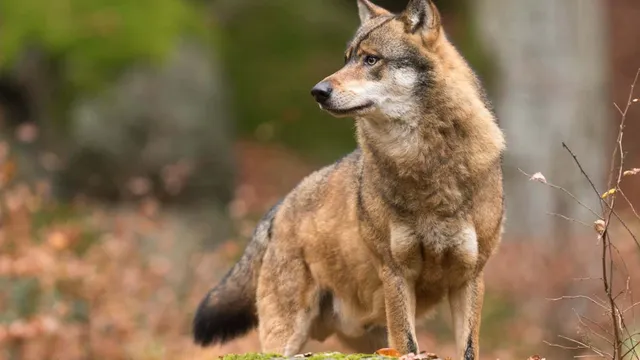
Wolves hunt bison in rare footage from Poland
Wolves hunt bison in rare footage from Poland
- A camera trap in Poland captured wolves hunting a juvenile bison, indicating a potential predation pattern.
- The European bison, once extinct in the wild, has been reintroduced and now numbers around 9,000 individuals.
- This rare footage raises questions about the ecological balance between wolves and bison in their shared habitat.
Story
In the Białowieża Primaeval Forest in Poland, a remarkable event was captured on camera, showcasing a pack of seven wolves engaging in a hunt for a juvenile bison. This footage is significant as it suggests that wolves may prey on European bison more frequently than previously believed. The European bison, once widespread across the continent, faced extinction in the early 20th century due to hunting and habitat loss. Conservation efforts in the 1950s led to their reintroduction, resulting in approximately 9,000 individuals currently living in various populations across Europe. The footage reveals that the wolves attacked a herd of 11 bison, focusing on a newborn calf. During the 20-minute encounter, the wolves attempted to bite and grab the calf, but the adult bison fiercely defended it, charging at the wolves and ultimately surrounding the calf to protect it. The outcome for the calf remains uncertain, as the footage does not clarify whether it survived the encounter. This rare observation highlights the low probability of capturing such predator-prey interactions, as noted by Oswald Schmitz from Yale University, who emphasized the luck involved in recording this event. The increasing wolf population in Europe, which has risen by 58% over the past decade, raises questions about the ecological dynamics between these predators and their prey. While there are concerns regarding the potential impact of bison on habitats and farmland, experts like Robin Wijnands from the Polish Academy of Sciences suggest that increased predation by wolves may not drastically reduce bison numbers but could help stabilize their population. Understanding the frequency of such predation events and their ecological consequences is crucial for wildlife management and conservation strategies. This incident serves as a reminder of the complex interactions within ecosystems and the importance of monitoring predator-prey relationships. As conservation efforts continue to support both wolf and bison populations, further research is needed to assess the implications of these dynamics on biodiversity and habitat health in Europe.


