

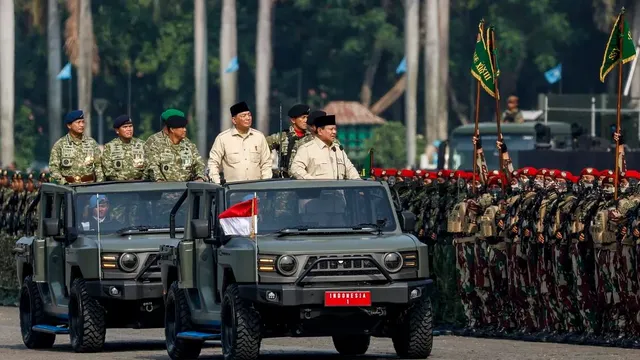
Indonesia plans military training for civil servants amid public debate
Indonesia plans military training for civil servants amid public debate
- The Indonesian government is training 4,000 civil servants as military reservists.
- The initiative is intended to cultivate nationalism and civic duty.
- The move has received a mixed response concerning its effectiveness and relevance.
Story
In recent developments, the Indonesian government has proposed a plan to provide military training to around 4,000 civil servants from various ministries and government institutions in Jakarta. Announced by Defence Minister Sjafrie Sjamsoeddin during a national defence retreat, the initiative aims to foster a stronger sense of nationalism and civic duty among the civil service. This move has led to mixed reactions from both the general public and analysts. While some have praised the policy for its potential to increase preparedness and strengthen national service, others are questioning its relevance in light of changing warfare dynamics that may not prioritize traditional military training for civilians. Critics have voiced concerns over the practicality and necessity of such military training for civil servants, highlighting a shift in modern warfare that emphasizes technological advancements and strategic approaches rather than conventional military drills. The debate reflects a broader tension in Indonesia regarding military involvement in civilian sectors and the implications it could have on the country's defense posture. Those in support of the initiative argue that building a spirit of service and preparedness within the civil service can enhance national resilience, especially in times of crisis. As discussions continue, the government is tasked with addressing these varied opinions and the potential impacts of the training program on civil servants' performance and the public's perception of government roles. Defense Minister Sjafrie Sjamsoeddin emphasized the importance of this initiative as part of a comprehensive national defense strategy, igniting broader conversations around the balance between traditional military methods and more modern approaches to national security. The plan's execution could serve as a crucial point for Indonesia as it considers its future military structure and civil-military relations under the evolving global security environment. In a related context, Japan has recently proposed to bring back military titles from World War II for its Self-Defense Forces, which has also sparked mixed reactions domestically. The prospect of changing terminology has reopened discussions in Asia about historical military roles, national identity, and the impact of such changes on regional stability. Japan's discussions parallel Indonesia's situation, indicating a wider regional trend around military reform and civil service roles in national defense initiatives.


