

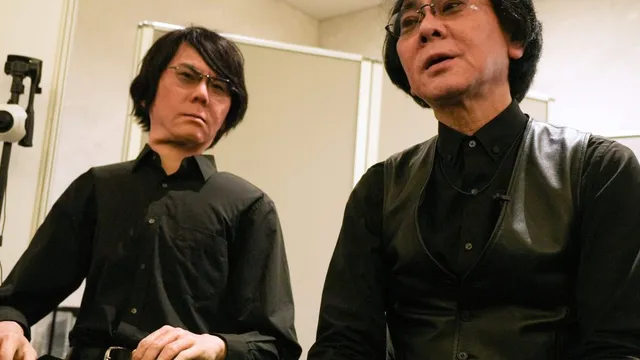
Hiroshi Ishiguro predicts robots will coexist with humans
Hiroshi Ishiguro predicts robots will coexist with humans
- At the Humanoids Summit, Japanese robotics experts, including Hiroshi Ishiguro, discuss the future of humanoid technology.
- Chinese companies are advancing robotics technology and focusing on cheaper mass production, challenging Japan's market position.
- Ishiguro expresses belief in the coexistence of robots and humans, reflecting a cultural shift regarding technological acceptance in Japan.
Story
In Japan, at the Humanoids Summit in Tokyo, prominent figures in the robotics field gathered to discuss the evolving relationship between humans and technology. Among them was Professor Hiroshi Ishiguro of Osaka University, who actively works on humanoid robots, including a clone of himself. At the event, he expressed his belief that robots will cohabit with humans, highlighting the growing acceptance of robotics in Japanese culture. He acknowledged that interest often centers more on his robotic counterpart than on himself, suggesting a societal shift towards embracing humanoid technology. Additionally, discussions at the summit reflected on the competition in the robotics industry, particularly the rise of Chinese firms such as Booster Robotics and LimX Dynamics that have refined robotic technologies originally developed in Japan and the U.S. These companies have shifted the landscape by offering more affordable robotics solutions with a focus on mass production. Tim Hornyuk, the author of “Loving the Machine: The Art and Science of Japanese Robots,” identified Japan's predicament as a manifestation of the “Galapagos syndrome,” where its innovations fail to translate effectively into the global market. He expressed hope for a breakthrough akin to the Ford Model T in humanoid robotics, but noted that the current efforts appeared insufficient against the backdrop of international developments. The implementation of robotics in Japan is increasingly relevant, particularly for addressing labor shortages in the country. Companies like GMO, based in Tokyo, are developing humanoids designed to assist with duties at airports, exemplifying how robotics can provide solutions in labor-intensive sectors. Such initiatives aim to create robots that can perform tasks interchangeably with human workers, making them integral to the workforce. The technology behind these robots is often supplied by Chinese firms, marking a significant shift in collaborative robotics development. Despite concerns about China’s growing robotics capabilities and mass production efficiency, experts like Keisuke Tsuta from Honda remain confident in Japan's historical standard of quality manufacturing. They believe that Japan’s cultural acceptance of robots, alongside their technical skills, position them well in the future of robotics. The conversations at the summit revealed a complex interplay of competition, collaboration, and cultural adaptation as Japan strives to maintain its relevance in an increasingly automated world.


