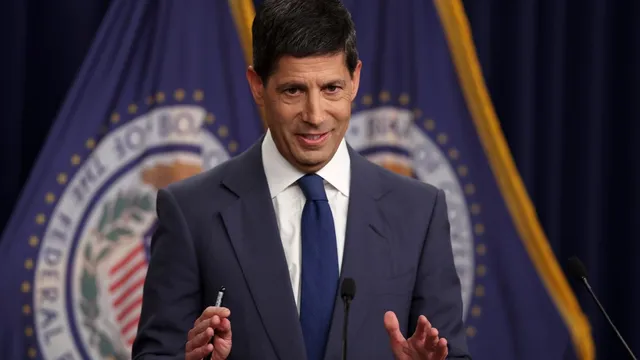
In the United States, the new chief of the Federal Reserve, Kevin Warsh, recently expressed optimism about the economy's performance, highlighting its 'impressive resilience' during a press conference. Warsh noted that despite recent economic shocks, indicators such as job gains and a stable unemployment rate suggest solid growth. However, this positive outlook starkly contrasts with the sentiments of many Americans, as recent polling indicates a growing discontent regarding the economy's state. A Quinnipiac University Poll revealed that only 28 percent of voters view the economy as either excellent or good, while a significant 59 percent believe conditions are worsening.
The disconnect between Warsh's assessment and public opinion is further illustrated by various surveys. A Harris Poll found that 95 percent of Americans perceive an affordability crisis, primarily driven by rising costs of essential goods like groceries and gas. CNN reported that only 23 percent of Americans describe the economy positively, with 77 percent rating it negatively. This sentiment is echoed by Pew Research, which found that only 24 percent view economic conditions favorably. The stark contrast between the Federal Reserve's optimistic outlook and the public's pessimism raises questions about the effectiveness of current economic policies.
Despite the positive indicators mentioned by Warsh, such as recent employment reports and a slowdown in inflation to 3.5 percent in June, the Federal Reserve faces significant challenges. The inflation rate remains well above the Fed's long-term target of 2 percent, and a substantial majority of voters, 88 percent according to the Quinnipiac Poll, consider inflation a serious issue. Warsh acknowledged that addressing rising prices would require more than just immediate actions, emphasizing that achieving price stability is a long-term endeavor.
The economic landscape is further complicated by external factors, including fluctuating gas prices and geopolitical tensions. While there were slight improvements in June, these gains have been largely overshadowed by ongoing inflationary pressures and public dissatisfaction. Experts like Michael Weber from Purdue University have noted that while some economic indicators suggest resilience, the overall consumer outlook remains bleak. This situation highlights the complexities of the current economic environment and the challenges the Federal Reserve faces in restoring public confidence.