

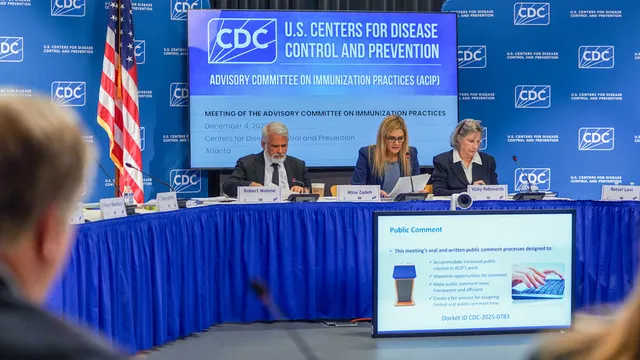
CDC panel delays hepatitis B vaccine vote amid chaotic meeting
CDC panel delays hepatitis B vaccine vote amid chaotic meeting
- The CDC's vaccine advisory panel postponed a vote on the hepatitis B vaccine schedule for infants during a chaotic meeting filled with misinformation.
- The advisory panel's decision was influenced by anti-vaccine activists presenting misleading claims regarding the vaccine's safety.
- Public health experts warn that delaying the vaccine schedule could lead to increased infections among infants.
Story
In the United States, the CDC's vaccine advisory panel faced significant challenges during a meeting on December 3, 2025, where they were meant to vote on the hepatitis B vaccine schedule for infants. This meeting was a marked departure from traditional practices, with a chaotic environment characterized by misinformation. The committee had initially planned a vote in September that was also set aside. As the CDC has advocated administering the hepatitis B vaccine within 24 hours of a newborn's birth for 34 years, public health experts voiced their concerns that altering this schedule could increase hepatitis B infections among infants. The meeting featured presentations from anti-vaccine activists and a climate scientist, diverging from the usual expert lectures and evidential analysis historically provided by CDC medical professionals. This led to a disorganized atmosphere where the integrity of scientific discussion was questioned. Andrew Nixon, Department of Health and Human Services spokesperson, noted that the chosen broadcast studio aimed to address heightened public interest rather than procedure, which some critics deemed inappropriate. The meeting's format and the inclusion of unsourced claims regarding the vaccine's safety were particularly concerning. Mark Blaxill, an anti-vaccine activist, suggested unfounded connections between vaccine symptoms and severe conditions like encephalitis, raising alarm among medical experts. Dr. Jason Goldman, President of the American College of Physicians, condemned the proceedings as political theater rather than evidence-based discussion, arguing it detracted from meaningful vaccine discourse, resulting in wasted resources and unclear decision processes. Congressional support for maintaining the existing vaccination guidelines was expressed, illustrating a division between established medical practice and emerging dissenting views. As the panel reconvenes for further discussions, including considerations about the childhood immunization schedule and vaccine components, the implications of their decisions could significantly affect public health policy. The failure to come to a consensus on the hepatitis B vaccine may spark further unrest within the health community and beyond, as experts emphasize the criticality of vaccines in preventing disease outbreaks.
Context
The history of hepatitis B vaccine recommendations by the Centers for Disease Control and Prevention (CDC) reflects a proactive approach to public health, targeting one of the significant viral infections in the United States and globally. Following the initial development of the hepatitis B vaccine, the CDC recognized the need for clear guidelines to protect populations at higher risk, which led to the establishment of a series of recommendations beginning in the early 1980s. The vaccine was first licensed in 1981, and by 1982, the CDC had advised its use for high-risk groups, including healthcare workers, patients with chronic liver diseases, and individuals with multiple sexual partners, amongst others. This period marked a crucial step towards controlling the spread of hepatitis B, which can lead to serious liver complications including cirrhosis and liver cancer. As scientific understanding of the disease progressed, so did the recommendations. In 1991, the CDC expanded its guidelines to include routine vaccination of all infants, regardless of their mother’s hepatitis B status. This was done in recognition of the fact that vertical transmission from mother to child was a primary route of hepatitis B infection in children. Subsequently, the recommendations were updated to emphasize the importance of vaccinations starting at birth, with a three-dose series administered at 0, 1-2 months, and 6-18 months. These guidelines aimed to significantly reduce the incidence of hepatitis B in the general population and contributed towards the goal of hepatitis B elimination. Changes in the CDC guidelines over the years reflect ongoing evaluations of epidemiological data and vaccination efficacy. By 2005, an enhanced focus on catch-up vaccinations for unvaccinated children and adults became prominent, acknowledging that there were substantial numbers of individuals who fell outside of the routine recommendations. This led to targeted educational campaigns aimed at healthcare providers and parents, stressing the importance of recognizing vaccination history and recommending vaccination when deemed necessary. Furthermore, the CDC also highlighted the role of vaccination in healthcare settings, advocating for healthcare personnel to be vaccinated to protect both patients and themselves. The most recent updates to the CDC hepatitis B vaccine recommendations include suggestions for specific populations, including travelers to endemic regions and individuals with certain medical conditions that may increase their risk of exposure. Additionally, the incorporation of adult vaccination programs into routine healthcare discussions illustrates the CDC's commitment to making hepatitis B vaccination widely accessible across all demographics. Overall, the CDC hepatitis B vaccine recommendations have evolved significantly over the decades, establishing comprehensive guidelines that have been instrumental in reducing rates of hepatitis B infection and its associated health complications.


