

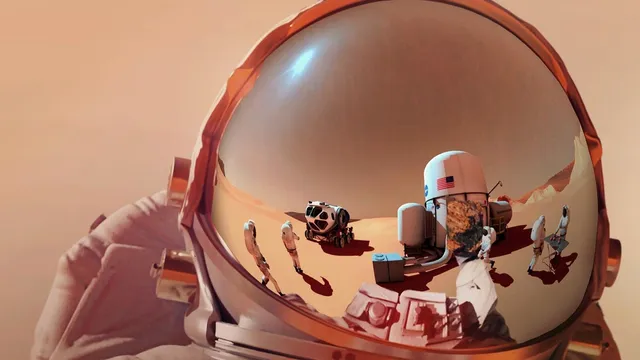
Scientists endorse life search as the center of Mars mission efforts
Scientists endorse life search as the center of Mars mission efforts
- A report from the National Academies of Sciences advocates for sending astronauts to Mars, with a strong focus on searching for life.
- The report outlines 11 science priorities and proposes a phased campaign involving both crewed and uncrewed missions.
- The scientific advancements from human exploration could significantly enhance our understanding of Mars and its habitability.
Story
In a significant report released by the National Academies of Sciences, Engineering, and Medicine, scientists detailed the rationale for sending astronauts to Mars, emphasizing the critical importance of searching for life on the planet. This comprehensive 240-page document outlines clear science priorities designed to guide NASA as it plots its roadmap for crewed missions to Mars, which are anticipated to take place in the 2030s. The report does not merely advocate for human exploration; it presents a strategy that includes 11 science priorities, all aimed at understanding Mars's environment and potential habitability. The campaign recommends a phased approach consisting of multiple missions, which will facilitate both crewed and uncrewed exploration activities on the Martian surface. Initial missions may include a human landing lasting 30 days, followed by uncrewed cargo deliveries to set the stage for extended crewed missions lasting up to 300 days. The authors of the report highlight the immense value human presence on Mars could provide, as it would allow for scientific discoveries that robots cannot achieve, thereby enriching our understanding of our universe and enhancing future exploration technologies. The lead co-chair, Linda T. Elkins-Tanton, underscored the momentous nature of such a mission, likening it to humanity's first moon landing more than half a century ago. There remains some public skepticism regarding NASA's budget and the feasibility of human missions due to challenges posed by Mars's environment, including its lack of atmosphere and magnetic field, which raises safety concerns about radiation exposure for astronauts. Nonetheless, the report argues for the opportunities and technological advancements that could emerge from such exploration, reinforcing the belief that pursuing human missions to Mars will yield significant scientific gains.


