

Trump administration ramps up military exercises against drug trafficking in the Caribbean
Trump administration ramps up military exercises against drug trafficking in the Caribbean
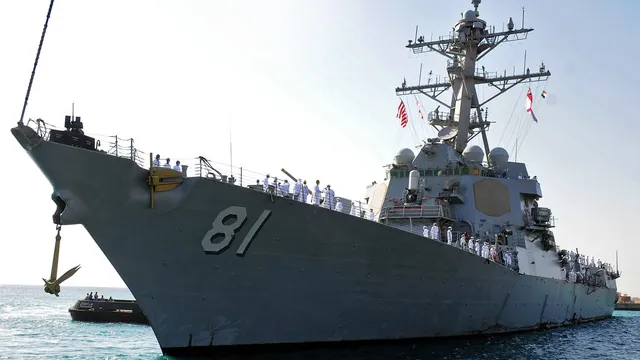
- The USS Winston S. Churchill conducted military exercises in the Caribbean with the aim of disrupting drug trafficking.
- U.S. officials are preparing to classify Maduro's Cartel de los Soles as a foreign terrorist organization.
- The military buildup represents a pivotal strategy to enhance U.S. presence and influence in the Caribbean.
Story
In November 2025, the USS Winston S. Churchill, an Arleigh Burke-class guided missile destroyer, conducted military exercises in the Caribbean, in conjunction with the Guyana Defence Force. This initiative aimed to enhance coordination and operations related to the disruption of maritime drug routes heading to Central America and the United States. The exercises included communication checks near Guyana's eastern coastline, with participation from another vessel, the USS Mahan, further emphasizing the collaborative efforts aimed at countering drug trafficking in the region while bolstering U.S. military presence. These military maneuvers come as the Trump administration intensifies its initiatives against various threats in the Caribbean, specifically targeting drug trade operations believed to be linked to Venezuelan authorities under Nicolás Maduro's regime. The U.S. government has accused the Cartel de los Soles, led by Maduro, of engaging in narcoterrorism and orchestrating significant violence across the Western Hemisphere. Consequently, following recommendations from senior officials, preparations were made to classify this organization as a foreign terrorist entity, thereby heightening the geopolitical stakes in the region. Additionally, the military buildup involved air support with bomber flights reaching near Venezuelan shores while enhancing military operations aimed at intercepting drug trafficking boats. Secretary of State Marco Rubio has emphasized the urgency and seriousness of this operation, especially in light of Maduro facing charges related to drug trafficking. Despite ongoing tensions and deteriorating security in Venezuela, the United States sees an opportunity to facilitate political change within Venezuela’s leadership structure by increasing pressure on Maduro, enabling a potential shift towards more favorable governance for Venezuelans. As part of this strategy, the U.S. military operations represent one of the largest buildups in the Caribbean since the Cuban Missile Crisis. The deployment, including aircraft carriers and military destroyers, marks a significant moment in U.S. military engagement, showcasing a commitment to safeguarding the region from illicit activities while aiming for broader geopolitical objectives.
Context
The Caribbean region has historically been a focal point for U.S. military operations due to its strategic location and political significance. In the late 19th and early 20th centuries, following the Spanish-American War, the U.S. expanded its influence in the Caribbean through interventions justified by the Monroe Doctrine, aimed at preventing European colonial encroachment. This resulted in the U.S. acquiring Puerto Rico and influencing events in Cuba, the Dominican Republic, and Haiti, laying the groundwork for military presence and interventions that would continue throughout the 20th century. The establishment of the Panama Canal further solidified the importance of the Caribbean, as it became a crucial artery for maritime trade and military mobility, leading to increased American interest and eventual military actions in the region. Throughout the 20th century, U.S. interventions in Caribbean nations often stemmed from a desire to promote stability and eliminate perceived communist threats, particularly in the Cold War era. The most notable military operation was the Bay of Pigs Invasion in 1961, where the U.S. aimed to overthrow Fidel Castro's regime in Cuba. Although this invasion ultimately failed, it exemplified American willingness to employ military forces to influence the political landscape of the Caribbean. Additionally, the U.S. invasion of Grenada in 1983, under the pretext of restoring order after a coup, underscored a continuing pattern of military intervention in the region, driven by concerns over Soviet influence and the safety of American citizens abroad. Another significant military operation in the Caribbean occurred during the U.S. occupation of Haiti from 1915 to 1934. Justifying this intervention by claiming that it was necessary to restore order and protect American investments, the U.S. presence lasted nearly two decades and had lasting implications for Haitian sovereignty and U.S.-Haiti relations. Similarly, in the Dominican Republic, a military presence persisted from 1916 to 1924, reflecting broader U.S. foreign policy goals of securing American interests and countering potential threats in the region, often resulting in long-term consequences for the affected nations. In more recent history, U.S. military operations in the Caribbean have included humanitarian missions and disaster relief efforts, particularly in the wake of catastrophic events such as hurricanes. The U.S. military played a critical role in responding to destructive hurricanes like Hurricane Katrina and Hurricane Maria, demonstrating its ongoing involvement in the Caribbean. This focus has shifted from traditional military interventions to cooperative engagement aimed at fostering stability and resilience in Caribbean nations. Nevertheless, the historical context of U.S. military operations in the Caribbean reveals a complex interplay of geopolitical interests, characterized by a mix of intervention, occupation, and humanitarian assistance.


