

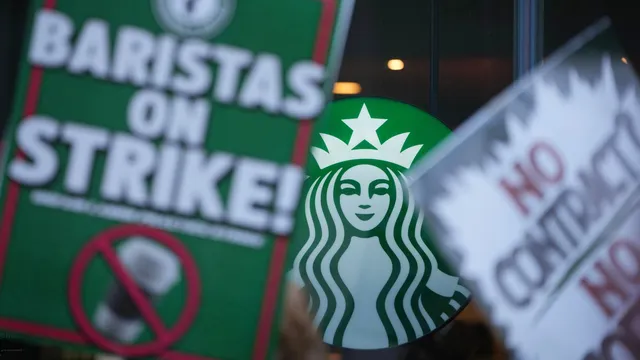
Starbucks strike grows as more stores demand better working conditions
Starbucks strike grows as more stores demand better working conditions
- Thirty more Starbucks stores nationwide joined a labor strike, increasing the total to 95 stores in 65 U.S. cities.
- The strike commenced on November 13, aligned with Starbucks’ Red Cup Day, which historically yields high customer traffic and sales.
- Despite the protests, Starbucks reported minimal disruptions and robust sales, suggesting a resilient customer base.
Story
In the United States, baristas from thirty additional Starbucks stores across twenty-five cities have joined a strike initiated by Starbucks Workers United. The strike marks a significant expansion of labor protests, bringing the total number of participating stores to ninety-five in sixty-five cities. This escalation began on November 13, coinciding with Starbucks’ traditional Red Cup Day, historically one of their busiest days of the year. Although the union claims that many stores are participating in the strike, Starbucks asserts that most of its locations remain open and operational, with minimal disruptions reported during the strike period. The organizing workers are demanding better wages, improved staffing, and resolution of numerous unfair labor practice charges that have been filed against Starbucks. Current labor negotiations between the union and Starbucks have reached an impasse, having ended in April 2025. As no specific end date has been established for the strike, it is expected to continue until an agreement is reached. In response, Starbucks stated it is ready to negotiate when the union is willing to return to the bargaining table. Despite the strike, Starbucks' financial performance has seen some improvement, attributed to recently announced tariff relief on coffee imports, which could lower costs of goods sold. This has led to a surprising rise in foot traffic and sales on Red Cup Day, contrasting the negative impact labor disputes might suggest. On that day, foot traffic increased by 44.5% compared to the daily average, demonstrating robust customer demand despite the ongoing labor turmoil. Public figures, including NYC Mayor-Elect Zohran Mamdani and Representative Alexandria Ocasio-Cortez, have publicly supported the striking workers, emphasizing the need for better contracts and workers' rights. As the situation evolves, the divide between Starbucks' positive financial outlook and the challenges posed by increasing labor disputes raises concerns for future investor sentiment and operational stability.


