

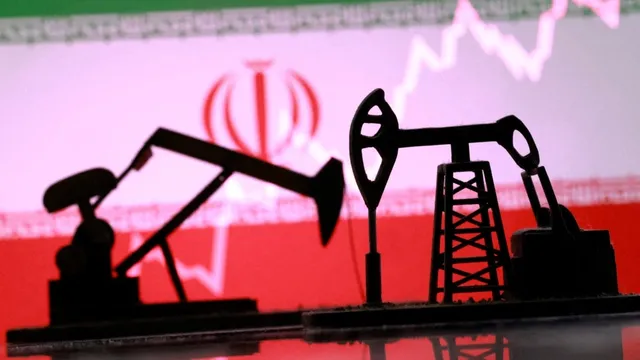
Iran's economy collapses as currency hits all-time low
Iran's economy collapses as currency hits all-time low
- Iran's national currency, the rial, has seen a drastic depreciation, hitting a record low against the US dollar.
- The US naval blockade and air strikes have severely disrupted Iran's oil exports, leading to soaring inflation and public unrest.
- The ongoing economic crisis and pressure on oil production may lead Iran to reconsider its negotiating stance with the US.
Story
In April 2026, Iran faced significant economic challenges as a result of a US naval blockade aimed at disrupting its oil exports. The blockade, initiated by President Donald Trump, intensified following air strikes on February 28, which targeted Iranian positions. As Iranian ports became increasingly inaccessible, exports plummeted, leading to an accumulation of oil and a pressing need for Iran to store its crude. The blockade has compelled the Iranian economy to confront severe issues, including soaring inflation and a depreciating national currency, the rial, which reached a record low of 1.81 million to the US dollar on April 29, exacerbating the economic crisis. Reports indicated that inflation soared to approximately 50 percent, intensifying pressures on basic consumer goods and resulting in growing public dissatisfaction and protests throughout the country. As Iran attempted to maintain control over oil exports, it encountered retaliatory pressures from the US, resulting in heightened military tensions and measures against shipping in the Persian Gulf. This combination of international sanctions and internal economic pressures has placed Tehran at a critical juncture in its geopolitical stance, catalyzing a potential shift in negotiations with the US. Iranian officials, while dismissing the blockade's effectiveness, face a dire economic landscape that may ultimately compel them into a more conciliatory position regarding US demands. The current state of affairs suggests a volatile interplay of military strategy and economic desperation that could reshape Iran's political position and its oil export strategy moving forward. Furthermore, the conflict has broader implications for global energy markets affected by these tensions.
Context
The current status of the U.S. blockade on Iran remains a complex and evolving issue, deeply rooted in geopolitical, economic, and security considerations. The blockade primarily began in response to Iran's nuclear program and its designation as a state sponsor of terrorism. Over the years, various sanctions have been implemented and tightened, targeting a wide array of sectors, including oil exports, banking, and other critical industries. This has significantly impacted Iran’s economy, causing inflation, unemployment, and limited access to essential goods and services. The blockade’s primary objective has been to curtail Iran's nuclear ambitions and restrict its influence in the Middle East. Internationally, the U.S. blockade has been met with mixed reactions. While some nations, particularly in Europe, have expressed support for diplomatic approaches to addressing concerns about Iran's nuclear program, others, including China and Russia, have criticized the sanctions as unilateral and damaging to their economic relations with Iran. The Joint Comprehensive Plan of Action (JCPOA), established in 2015, initially created a framework for negotiating sanctions relief in exchange for restraint on Iran’s nuclear developments. However, the withdrawal of the U.S. from the agreement in 2018, followed by a re-imposition of sanctions, has led to increased tensions and a more aggressive Iranian posture. As of April 2026, the situation remains precarious. Iran has progressively escalated its nuclear activities, interpreting the U.S. actions as a signal to rapidly advance its capabilities. In turn, the U.S. administration has been faced with the challenge of responding to these developments without escalating military confrontations. Diplomatic efforts to revive the JCPOA and facilitate a structured dialogue have been intermittent, with various stakeholders advocating for renewed negotiations, yet progress has been hindered by distrust and conflicting interests. Amidst this backdrop, the regional security dynamics continue to shift, with Iran exerting its influence through proxy groups across the Middle East. In conclusion, the U.S. blockade on Iran is far from a static issue; it continues to evolve in response to Iran's actions and the broader geopolitical landscape. The humanitarian implications of the sanctions have raised ethical considerations, as the blockade has inadvertently affected the Iranian populace, leading to calls for a review of the sanctions framework. There is an urgent need for a balanced approach that addresses security concerns while also considering the socio-economic implications on the Iranian people. Future engagement strategies will require careful consideration of international alliances, the potential for renewed diplomatic discussion, and realistic assessments of Iran's nuclear intentions.


