

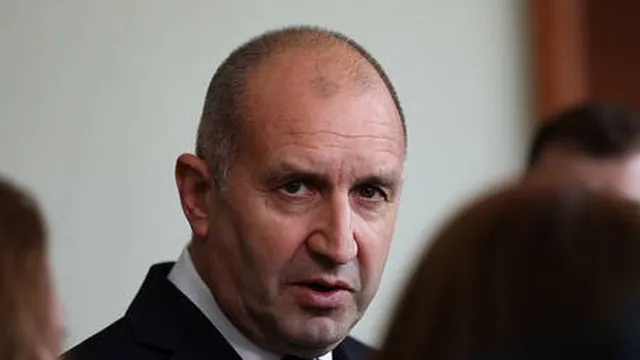
Rumen Radev resigns to form new political party amid Bulgaria's crisis
Rumen Radev resigns to form new political party amid Bulgaria's crisis
- Bulgaria's President Rumen Radev announced he would resign on January 19, 2026, due to widespread political disillusionment.
- His resignation follows large protests against the previous government, which collapsed amid corruption controversies.
- Radev's departure leaves a vacuum in a politically fragmented landscape, potentially opening doors for a new political movement.
Story
Bulgaria is currently facing significant political turmoil, as the nation’s president, Rumen Radev, announced his resignation on January 19, 2026. In a televised address, Radev expressed concerns over the country's deteriorating political climate, which he described as a ‘vicious model of governance’. His resignation follows recent extensive protests against corruption, leading to the previous government's collapse. As a response to this instability, Radev suggested that significant changes were necessary, potentially hinting at forming his own political party to address widespread public discontent. The president's departure marks a historic moment in Bulgaria, making him the first head of state to resign in the country's post-communist history. Radev, who has held the presidency since 2016 and again after election in 2021, has hinted that he might seek to consolidate democratic forces across the political spectrum, aiming to unite left and right factions dissatisfied with current governance. His resignation is expected to be submitted formally to the Constitutional Court, after which Vice President Iliana Yotova is set to take over leadership until the next presidential election, slated for later this year. Radev’s skepticism about joining the euro and his Kremlin-friendly positions, particularly regarding the conflict in Ukraine, have affected his political image. Despite being a prominent figure against corruption, he has had to navigate complex political waters, where his popularity has waned among certain segments of the public. Analysts suggest that while he enjoys significant support, his new political movement may struggle to achieve a majority in upcoming elections. The political climate in Bulgaria has been precarious, as the nation heads towards its eighth parliamentary election in four years due to the failure of coalition governments. Protests sparked by anti-corruption sentiments illustrate a broader dissatisfaction among citizens, leading many to feel disenfranchised. Radev’s resignation, therefore, could represent an opportunity to reshape the political landscape and catalyze reform, although its implications for national stability remain uncertain.
Context
The history of Bulgaria's political protests is rich and complex, reflecting the nation's struggles for democracy and social change. Protests in Bulgaria can be traced back to the fall of communism in 1989, when the country transitioned from a single-party state to a multi-party democracy. This period saw the emergence of public demonstrations aimed at demanding political reform and greater freedoms. The transitional phase resulted in widespread protests against economic hardships and government corruption. Notably, the protests of 1997 were significant, as they demanded the resignation of the government due to hyperinflation and poverty, which ultimately led to new elections and the adoption of a more liberal economic policy framework. In the early 2000s, Bulgaria witnessed a relative stabilization politically and economically, but dissatisfaction began to brew again towards the end of the decade, particularly against the backdrop of global financial crises. The protests of 2013 marked a watershed moment in Bulgarian political protests, sparked by a rise in utility prices and perceived corruption within the political elite. These demonstrations drew hundreds of thousands of Bulgarians to the streets, leading to the resignation of Prime Minister Plamen Oresharski and underscoring the growing frustration with political governance. Activists sought to address broader issues beyond the immediate catalysts, including calls for a more transparent political system and accountability among elected officials. The more recent protests in 2020 highlighted issues of corruption, judicial independence, and governance. Triggered by the arrest of a prominent anti-corruption figure and perceived government overreach, the protests grew to encompass widespread demands for a complete overhaul of Bulgaria's political landscape. Participants included a broad coalition of civil society, students, and various political groups that came together to express their discontent with the ruling government. These protests showcased the resilience of organized civil action and the commitment of citizens to effect meaningful political change. The sustained public pressure during these events demonstrated a shift towards greater civic engagement and an increasing awareness of democratic principles among the populace. As of January 2026, the legacy of these protests continues to influence the political landscape in Bulgaria. The ongoing dialogue around the necessity for reforms and the fight against corruption persists as crucial themes in Bulgarian society. Political protests remain a vital platform for expressing grievances and demanding change, illustrating the evolution of public consciousness regarding democratic rights and accountability. Observers note that while challenges remain, the historical trajectory of protests in Bulgaria has instilled a sense of empowerment in the citizenry, signifying that ordinary people can rally together to demand transparency, justice, and reform in pursuit of a healthier democracy.


