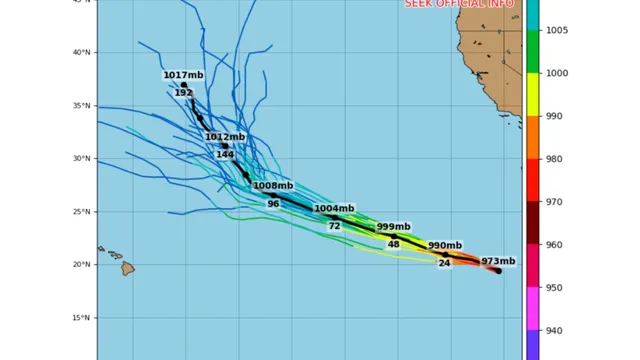
In July 2026, Hurricane Genevieve formed in the eastern Pacific Ocean, developing from a tropical depression on July 24, far off the coast of Mexico. It quickly intensified, reaching hurricane status by July 25 and becoming a Category 5 hurricane with sustained winds of 155 miles per hour by July 26. This marked Genevieve as the first Category 5 hurricane in the eastern Pacific since Kristy in 2024. Although it posed no direct threat to land, it was noted as the most powerful hurricane in the region for the year, according to meteorologists.
As of July 30, 2026, the National Hurricane Center reported that Genevieve had weakened to a Category 2 hurricane with maximum sustained winds near 100 miles per hour. The storm was moving west-northwest at approximately 9 miles per hour, with expectations of a slight increase in forward speed in the coming days. Despite its weakening, the hurricane generated swells that impacted southern California and the Baja California Peninsula, leading to warnings about life-threatening surf and rip current conditions.
Meteorologists, including Alex DaSilva from AccuWeather, indicated that while no direct impacts were expected in Mexico, rough surf and dangerous rip currents would persist along the west coast of Mexico and Southern California. The public was advised to swim only at beaches with lifeguards and to stay out of the ocean when hazardous conditions were present.
The 2026 eastern Pacific hurricane season is forecasted to be active, with expectations of numerous tropical storms and hurricanes influenced by the El Niño climate pattern. AccuWeather predicts 17 to 22 named storms, including 9 to 13 hurricanes and 4 to 8 major hurricanes, due to warm sea-surface temperatures and high ocean heat content in the region.