

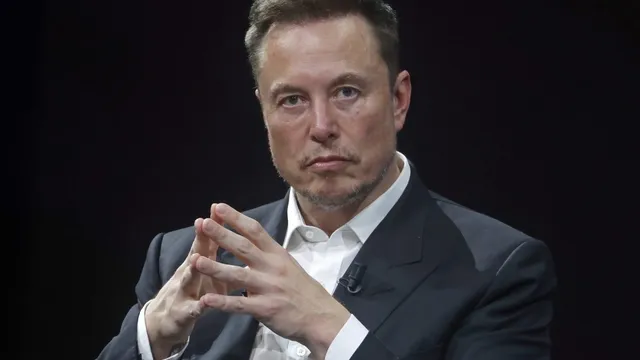
Elon Musk takes control of AI infrastructure with crucial lease agreement
Elon Musk takes control of AI infrastructure with crucial lease agreement
- Elon Musk's SpaceX has secured a lease agreement with Anthropic, projected to generate $3 billion to $4 billion annually.
- The deal emphasizes the significance of data center management in the competitive AI landscape.
- Musk's strategy indicates a potential shift towards data center control, marking his transition from a model maker to an AI infrastructure landlord.
Story
In a strategic move during a significant shift in artificial intelligence infrastructure, Elon Musk has entered into a deal involving a major lease of computing power to the AI startup Anthropic. This decision, announced about three months ago, positions SpaceX as a pivotal player in the AI landscape amid a rapidly changing market. The deal is anticipated to yield SpaceX approximately $3 billion to $4 billion annually, with substantial cash profits expected from the arrangement. By merging Musk's AI company, xAI, into SpaceX under the new brand SpaceXAi, he aims to transform SpaceX from a mere spacefaring organization into a key competitor in cloud computing and AI services. Analysts highlight the necessity of such a business pivot as Musk transitions from a model-focused perspective to a centralized approach regarding data center control. The acquisition underscores the growing importance of data centers, especially in the AI sector, leading to a dynamic landscape dominated by large cloud service providers. Further complicating the narrative is the undercurrent of competition Musk faces, particularly against established giants like Amazon Web Services (AWS). The current AI landscape relies heavily on effective data center management, and while Musk's expansive compute resources could give him an edge, establishing a robust global footprint remains critical. Andrew Moore, former head of Google Cloud AI, notes that companies often prefer to store their data in specifically chosen locations based on energy costs and reliability, suggesting that Musk's singular data center strategy may not suffice against AWS’s established infrastructure. Although Musk’s new lease agreement grants him leverage over Anthropic, especially with a unique clause allowing him to reclaim compute resources if Anthropic's AI poses threats to humanity, the long-term effectiveness of this strategy is still under scrutiny. The competitive environment necessitates efficient resource allocation and innovative approaches toward compute efficiency, as Anthropic serves one of the three leading frontier AI labs operating under the infrastructure provided by a competitor. As the battle for AI supremacy continues, the venture may also hold implications for the larger tech market, where the outlines of new economic assessments and valuations are beginning to take shape. In a world where cloud computing and AI are becoming increasingly intertwined, Musk’s ability to secure control over data centers could be seen as a decisive factor in shaping the future pathways of artificial intelligence, cloud economics, and his business endeavors at SpaceX. Ultimately, this strategic lease not only signals a proactive step by Musk in the AI domain but also illustrates the complexities involved in establishing a successful competitive framework within a burgeoning industry that operates at the intersection of technology, finance, and ethical considerations surrounding AI deployment.
Context
The impact of data center control in AI has been a significant area of focus as organizations increasingly rely on artificial intelligence to enhance their operations and decision-making processes. Data centers serve as the backbone for AI applications, hosting the infrastructure necessary for data processing, storage, and management. The efficiency and effectiveness of AI systems are largely contingent upon the capabilities of data centers, emphasizing the role of control mechanisms in optimizing performance, ensuring reliability, and facilitating scalability. With advancements in AI algorithms and processing power, data centers must adapt to meet the demands of high-speed data processing and real-time analytics. This requires implementing sophisticated control techniques that can dynamically allocate resources, monitor workload distribution, and maintain energy efficiency, all of which contribute to enhanced AI performance. Furthermore, the control of data centers directly influences the sustainability efforts in AI development. As the environmental impact of technology becomes a growing concern, data center operators are increasingly leveraging control systems to reduce energy consumption and optimize cooling processes. The integration of AI-driven optimization methods allows for predictive analytics to adjust operational parameters, thus minimizing waste and maximizing resource utilization. This not only helps in reducing carbon footprints but also aligns with broader organizational goals of achieving sustainability. As artificial intelligence continues to evolve, the role of data center control in driving energy-efficient practices will be paramount in mitigating the environmental challenges associated with large-scale AI deployments. In addition to operational efficiency and sustainability, data center control mechanisms play a crucial role in ensuring data security and compliance in AI applications. The sensitive nature of data processed by AI systems necessitates robust security protocols that can protect against cyber threats and unauthorized access. Effective control frameworks enable data centers to enforce security measures, monitor access in real time, and respond rapidly to potential breaches. This level of vigilance is essential as regulatory concerns and data protection laws become increasingly stringent globally, requiring organizations to maintain high standards of compliance while leveraging AI technologies. Finally, the interplay between AI and data center control will shape the future of technology development and innovation. The introduction of edge computing, for instance, is a direct response to the limitations of traditional data center architectures in processing vast amounts of data generated by IoT devices. Through enhanced control strategies, data centers are expected to evolve into more integrated ecosystems that can support decentralized data processing, thereby improving response times and optimizing user experiences. As industries across the globe continue to digitize, the effectiveness of data center control will be critical in harnessing the full potential of AI, fostering innovation while ensuring reliability, security, and sustainability in the digital landscape.


