

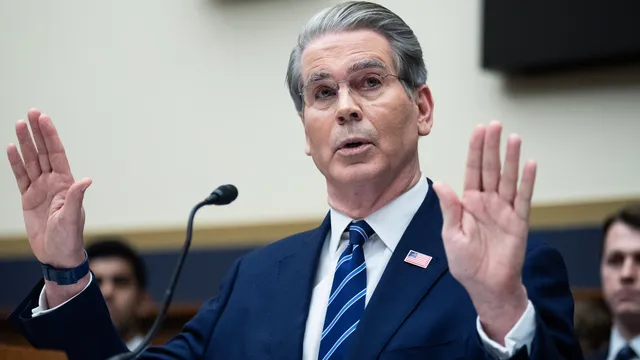
Bessent warns of severe loss if Trump’s tariff authority is revoked
Bessent warns of severe loss if Trump’s tariff authority is revoked
- Treasury Secretary Scott Bessent highlighted the significance of President Trump's emergency tariff powers in negotiations.
- Research indicates that tariffs have cost American households an average of $1,000 last year, escalating to $1,300 this year.
- Bessent warns that revoking these powers would result in a tremendous loss for the U.S. in geopolitical negotiations.
Story
In November 2025, the Supreme Court heard arguments concerning President Donald Trump’s use of emergency tariff powers, which are part of his International Emergency Economic Powers Act (IEEPA) authority. Treasury Secretary Scott Bessent emphasized that these powers have been crucial for negotiating favorable deals with other countries, citing their role in addressing the fentanyl crisis and negotiating with China, Canada, and Mexico. Bessent argued that taking away this authority from the president would limit America's leverage during important geopolitical negotiations. Current data reveals that American households have experienced significant financial burdens as a result of Trump's tariffs, with estimates suggesting an average cost of $1,000 per household in the previous year. These tariffs, characterized as one of the largest tax increases since 1993 by the nonpartisan Tax Foundation, are set to rise further, expected to impact American households with costs reaching $1,300 this year if maintained. The impact of the tariffs is exacerbating economic pressures at a time when many households are already struggling with rising costs of living. Despite the substantial revenues generated by tariffs, which stood at $264 billion in 2025, the research indicated that the federal government’s intake is significantly less than the trillions projected by the White House. Analysts noted that the increased tariff rates, which surged from 2% to around 10% over the previous year, have largely affected consumer goods such as electronics, toys, and automobile imports, alongside food items grown abroad. Reports indicate marked increases in prices for certain products, including coffee and ground beef, reflecting the broader economic impact of these tariffs. In contrast to some criticism, the White House has pointed to improvements in economic indicators, like GDP growth and rising real wages, asserting that investments in the U.S. economy have continued. Nonetheless, the overall implications of the tariff policies remain a point of contention, as they could overshadow the benefits purportedly brought by recent tax cuts. As the Supreme Court is expected to deliver its decision on the legality of Trump’s emergency tariff authority later in 2026, the future of these tariff policies and their ensuing economic impact is uncertain.


