

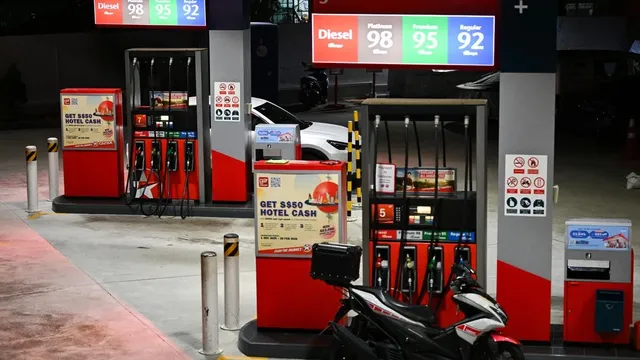
Iran's attacks escalate tensions, leading to soaring petrol prices in Singapore
Iran's attacks escalate tensions, leading to soaring petrol prices in Singapore
- Tensions in the Middle East have escalated due to Iranian attacks on oil infrastructure.
- The conflict has led to significant increases in oil prices globally, impacting petrol and electricity costs.
- Consumers in Singapore will likely face higher prices soon as the situation continues to unfold.
Story
On March 9, 2026, tensions in the Middle East intensified as Iran targeted critical oil infrastructure in Bahrain, Kuwait, Qatar, Saudi Arabia, and the United Arab Emirates. This escalation resulted from ongoing conflicts involving missile and drone attacks by Iran on Israel and American military installations in the region. The attacks have led to significant disruptions in oil supply, driving global prices sharply higher. Following these events, petrol prices in Singapore are expected to increase along with electricity prices, as they heavily rely on natural gas, which has also been affected by the conflict. The situation further worsened as Iran's threats disrupted the transport of oil through the Strait of Hormuz, a vital route for global oil shipments. An important aspect of this situation is the fact that the Gulf region accounts for around 40 percent of the world’s crude oil exports. Kuwait Petroleum Corporation announced reductions in oil production at its facilities due to safety concerns spurred by Iranian threats. Analysts suggest that while closures of key shipping routes like the Strait of Hormuz pose immediate issues, the possibility of quick reversals upon reopening remains. The geopolitical landscape shifted dramatically when Qatar declared force majeure at its Ras Laffan natural gas plant following an attack, highlighting the vulnerabilities in liquefied natural gas supplies—critical for energy provision in Singapore and other regional markets. To compound these challenges, China's decision on March 5 to halt petrol exports amid the escalating situation has further strained the regional supply chains, complicating the availability of fuel to Singapore. If the conflict persists, the removal of over 20 percent of global crude supply will likely continue to affect energy markets worldwide. As a result, Singapore's Energy Market Authority is bracing for increased electricity rates due to the heightened global energy prices stemming from Middle Eastern tensions. This situation underscores the interconnectedness of global energy markets and geopolitical conflicts, as Singapore depends significantly on Middle Eastern LNG imports, with about 42.5 percent of its LNG supply coming from the region. Consequently, consumers in Singapore and beyond will inevitably bear the consequences of these rising prices, marking a critical moment in the escalation of such conflicts impacting everyday life across the globe.


