
business
controversial

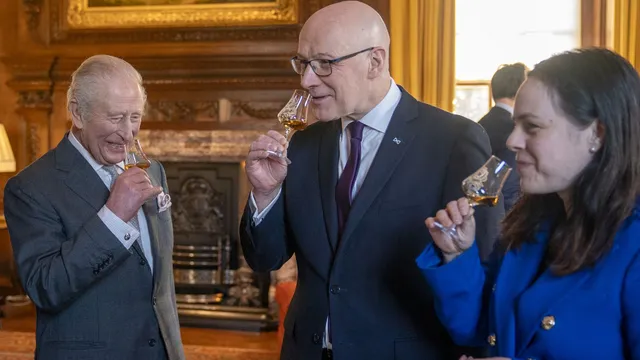
King Charles celebrates Scottish business spirit with whisky tasting

Jan 19, 2026, 4:55 PM10
(Update: Jan 19, 2026, 4:55 PM)
English singer and songwriter
official residence of the British monarch in Scotland

King Charles celebrates Scottish business spirit with whisky tasting

  • King Charles hosted a reception at the Palace of Holyroodhouse in Edinburgh for Scottish business owners and investors.
  • The event included whisky tasting, featuring a 31-year-old whisky from Rosebank Distillery, which won accolades at an international competition.
  • The King's engagement with these businesses highlights the importance of royal attention in boosting the Scottish entrepreneurial spirit.
Share opinion
Tip: Add insight, not just a reaction
1

Story

On January 19, 2026, King Charles hosted a reception at the Palace of Holyroodhouse in Edinburgh, celebrating the entrepreneurial spirit of Scottish business owners and investors. The event, held in the Throne Room, welcomed a variety of entrepreneurs, capital investment firms, and business representatives from key industries such as technology, healthcare, and AI. The event was attended by prominent Scottish leaders, including John Swinney, the First Minister, and Deputy First Minister Kate Forbes. The gathering commenced with a whisky tasting session, showcasing the well-regarded Rosebank Distillery, which has a rich history dating back to 1840 and recently garnered international acclaim by winning the best in show award at the 2025 San Francisco World Spirits Competition. King Charles personally sampled a rare 31-year-old whisky from Rosebank, claiming it to have delectable notes of toffee, which is characteristic of long-aged whiskies. Leonard Russell, the managing director of the distillery, engaged with King Charles about the techniques used in their production, particularly the fact that the whisky is triple distilled. The King's interest in the distillery's operations and his inquiries about their recent recognitions underscored his engagement with not just the event but also the wider Scottish business landscape. Leonard Russell noted that it was an honor for the family-run distillery to share their achievements with the King, reflecting positively on how such royal interest boosts the profile of Scottish businesses. This event coincided with the Duke of Sussex, Prince Harry's, trial in London against Associated Newspapers over alleged unlawful information-gathering practices. As the royal family showcased their commitment to engaging with Scottish industry, the court proceedings in London added an interesting backdrop to the event, illustrating the contrasting activities and challenges faced by different members of the royal family at the same time.

Context

Royal visits have historically had a notable impact on local businesses, with effects that can vary significantly based on various factors, including the duration of the visit, the scale of associated events, and the level of engagement from the community. When members of the royal family visit a locale, it often attracts a surge of interest from tourists and media, which can lead to increased foot traffic in local shops, restaurants, and attractions. This phenomenon can translate into a temporary boost in sales, providing a much-needed influx of revenue for small and medium-sized enterprises that might be struggling to compete against larger corporations. Moreover, the prestige associated with a royal visit can enhance the perception of a local area, potentially leading to longer-term economic benefits as tourism increases over time due to heightened visibility and interest in the region. In many instances, local businesses prepare for royal visits by stocking up on inventory and enhancing their services to capitalize on the expected surge in visitors. This preparation can involve everything from creating commemorative products to developing promotional campaigns aimed at both locals and tourists who may be drawn to the area. The excitement of a royal visit often generates a unique opportunity for entrepreneurs to showcase the distinctiveness of their offerings, fostering a sense of community pride and encouraging residents to support local businesses during the event. However, while the immediate effects can be overwhelmingly positive, it is essential for businesses to manage their resources prudently to avoid issues such as overstocking or staffing shortages, which can diminish the potential benefits of such events. Furthermore, royal visits can spur local governments to invest in infrastructure improvements and public services, which can create a more favorable environment for businesses in the long term. Upgrades to transportation, sanitation, and public spaces tend to enhance the overall experience for visitors, further incentivizing tourism and patronage of local establishments. In some cases, local chambers of commerce may engage in partnerships with the royal family or their representatives to coordinate events, fostering a collaborative spirit that can amplify the economic impact of the visit. However, it is also vital to recognize the challenges that come with hosting royal visits. The need for heightened security and logistical planning can strain local resources and disrupt regular business operations. While the potential benefits are substantial, businesses must navigate the complexities involved in such high-profile events, ensuring they are adequately prepared to embrace the opportunities while mitigating any negative repercussions. Thus, the impact of royal visits on local businesses is a multifaceted issue that deserves careful consideration, as communities strive to harness the advantages while addressing the accompanying challenges.

2026 All rights reserved
