

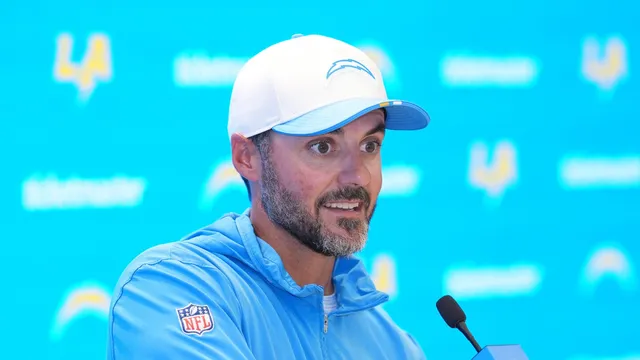
Raiders interview top defensive coordinators for head coach position
Raiders interview top defensive coordinators for head coach position
- The Raiders are conducting second interviews for their head coach position, with Jesse Minter and Jeff Hafley on the list.
- The Ravens have also entered the second round of interviews for head coaching candidates, including Anthony Weaver.
- This coaching cycle sees high-profile candidates under consideration, indicating a competitive landscape for NFL head coaching roles.
Story
In the ongoing coaching cycle, the Las Vegas Raiders are actively conducting second interviews for their head coach position. Notably, Jesse Minter, the defensive coordinator for the Los Angeles Chargers, and Jeff Hafley, the Green Bay Packers' defensive coordinator, have been scheduled for interviews on Tuesday and Wednesday, respectively. Their candidacies speak to the growing emphasis on strong defensive leadership within NFL teams as Minter is also considered for a role with the Cleveland Browns. Moreover, Hafley is being interviewed to fill the vacancy left by Mike McDaniel in Miami. Meanwhile, the Baltimore Ravens are progressing into the second round of interviews to identify their next head coach. Among the candidates is Anthony Weaver, currently the Dolphins' defensive coordinator, who will be meeting with the Ravens on Tuesday. Weaver previously served as an assistant in Baltimore for three years, adding a layer of familiarity to his candidacy. Additionally, the Ravens are interviewing Anthony Campanile, the defensive coordinator for the Jaguars, reflecting a diverse approach to finding the right leadership. Elsewhere in the NFL, Bill Belichick's coaching future remains unclear. Since being dismissed by the New England Patriots two years ago, he has only been linked to one job, with no other teams showing interest in hiring him despite the turnover of coaching positions in the league. Belichick’s situation raises questions about how franchises pursue experienced coaches amid the search for effective leadership. As the coaching carousel spins, organizations like the Pittsburgh Steelers and Miami Dolphins assess their needs for a head coach who can thrive in an era where offensive strategies are critical, particularly with up-and-coming quarterbacks like Josh Allen for the Bills. The dynamics around these vacancies indicate that while stability is sought after, the search for a head coach capable of fostering success continues amidst uncertainty.
Context
The impact of head coaching changes on NFL teams has been a topic of significant discussion among analysts, fans, and sports commentators alike. An effective head coach is often regarded as crucial in determining the overall performance and success of an NFL team. As experienced leaders, head coaches are responsible for developing game strategies, mentoring players, and managing the team's overall environment. When a team makes the decision to part ways with a head coach, it can lead to various consequences that affect not only the current season but also the long-term trajectory of the franchise. Through the years, franchises that have made timely and well-considered coaching changes have often seen a boost in team morale and performance, while indecisiveness in coaching hires can lead to prolonged struggle and mediocrity. Data from past seasons highlights a correlation between head coaching changes and team performance. Teams like the Kansas City Chiefs under Andy Reid demonstrated that a well-structured transition can yield immediate results, with the team significantly improving its win-loss record in subsequent seasons after hiring Reid. Conversely, coaching changes can also induce instability. Inconsistent leadership may result in confusion around team identity, affecting player performance and team cohesion. Additionally, the adaptation of players to a new system can lead to temporary setbacks as they balance learning new playbooks with maintaining execution under pressure. Moreover, the timing of coaching changes plays a significant role in their overall impact. Mid-season changes can offer immediate relief to a struggling team and can galvanize players with a sense of fresh hope or urgency, but they often require a careful approach to not disrupt the existing dynamics too severely. Off-season changes, while providing more time for acclimatization, can sometimes lead to a prolonged adjustment period, making it challenging for teams to harness momentum at the start of a new season. Another critical aspect of the impact of coaching changes is the broader implications for franchise culture. New head coaches bring distinct philosophies, which can reshape core values within an organization. A coach with a strong track record of success can instill a winning mindset, whereas a coach lacking experience may struggle to foster the necessary culture for success. While the potential for growth exists post-transition, the importance of a deliberate selection process—considering factors like the coach's background, past success, and compatibility with team goals—is essential in mitigating risks associated with head coaching changes. Ultimately, the ramifications of head coaching changes on NFL teams are multifaceted, influencing immediate performance, player development, and long-term organizational stability.


