

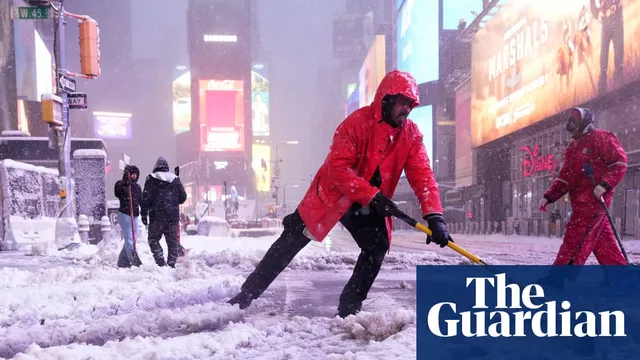
New York City faces historic blizzard as winter storm paralyzes the region
New York City faces historic blizzard as winter storm paralyzes the region
- A severe winter storm hit New York City and nearby states, resulting in declarations of emergency and road travel bans.
- Up to 20 inches of snow was expected, causing travel chaos and leading to the cancellation of thousands of flights.
- Residents were urged to stay indoors, as officials emphasized the dangers of the blizzard conditions.
Story
In the United States, particularly impacting New York City and neighboring states, a severe winter storm struck on February 23, 2026, with blizzard warnings issued. Forecasters predicted snowfall totals reaching up to 20 inches, prompting local government officials to declare states of emergency across multiple counties, including New York and New Jersey. Mayor Zohran Mamdani announced travel bans and school closures, urging residents to stay indoors due to dangerous conditions expected to last throughout the day. The storm was characterized by heavy snow, strong winds, and reduced visibility, with over 300,000 households reported without power in the region. As the storm intensified, significant travel disruptions were noted, including the cancellation and delay of thousands of flights, particularly affecting major airports in New York and Boston. Emergency services, including the deployment of over 5,000 municipal workers, were mobilized to mitigate the storm's impacts. Additionally, the city's Code Blue operations were activated to protect homeless individuals during the extreme weather conditions. This snowstorm exemplifies the dangers of winter storms that can result in critical infrastructure challenges and pose risks to public safety, with long-lasting effects expected on local transportation and power systems. Meteorological experts noted that this storm was anticipated to become a bomb cyclone, indicating a rapid drop in atmospheric pressure that would exacerbate blizzard conditions. With maximum wind gusts forecasted to reach up to 60 mph, the combination of heavy, wet snow and high winds raised concerns of downed power lines and further outages. Local officials were vigilant about the potential for historic snowfall levels and the possibility of widespread electricity failure due to adverse weather conditions. Overall, this winter storm not only disrupted everyday life in the New York metropolitan area but also highlighted the importance of preparedness for severe weather among residents and local authorities. As roads and public transport were largely shut down, residents were encouraged to remain reliant on emergency services and heed guidance from city officials until conditions improved. The snowstorm's arrival represented a significant challenge for the region, reminiscent of winter storms experienced in previous years, and underscored the unpredictable nature of winter weather.
Context
The state of emergency procedures in the Northeast United States is a critical component of the region's emergency management framework, particularly in response to natural disasters such as severe storms, floods, and other significant incidents. Emergency procedures are designed to ensure a coordinated and effective response from local, state, and federal agencies, as well as to facilitate communication and support to affected communities. The establishment of clear protocols and systems for managing emergencies helps to minimize disruption, protect lives, and safeguard property. Furthermore, recent events have highlighted the necessity for continuous evaluation and enhancement of these procedures to adapt to evolving challenges, including climate change and increased urbanization. In recent years, Northeast states have implemented a range of emergency management strategies, incorporating lessons learned from previous events. States such as New York, New Jersey, and Massachusetts have developed comprehensive preparedness plans that involve community engagement, training for responders, and the utilization of advanced technologies for real-time information sharing. The integration of resources through state and local emergency management agencies enhances the ability to respond effectively during crises. Enhanced partnerships with non-governmental organizations, private sector entities, and volunteer groups further strengthen the capacity for disaster response and recovery. Public awareness campaigns also play an important role in emergency preparedness. These initiatives educate residents about the types of risks they may face, appropriate responses, and the importance of having personal emergency plans and supplies ready. The Northeast, characterized by its diverse geography and varying climate, requires tailored messaging to ensure that all demographics understand how to protect themselves and their families in the event of an emergency. Moreover, accessibility for vulnerable populations is a crucial aspect that must be considered to ensure no community is left behind during disaster situations. Evaluating the effectiveness of state of emergency procedures is an ongoing process that involves conducting after-action reviews and identifying areas for improvement. Engaging with community stakeholders to gather feedback, as well as incorporating new data and research findings into existing frameworks, is essential for fostering resilience in the face of future emergencies. Overall, the state of emergency procedures in the Northeast US remain a vital part of safeguarding communities and ensuring that systems are in place to effectively manage crises as they arise.


