

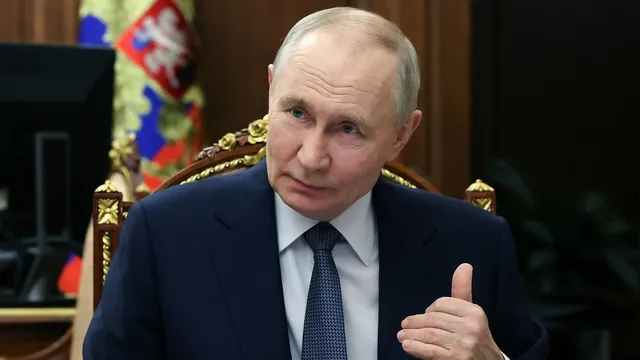
Putin demands oligarchs support Russia's war budget
Putin demands oligarchs support Russia's war budget
- Putin convened a meeting with oligarchs to address military funding amidst rising defense expenses due to the long-standing war in Ukraine.
- Oligarchs like Suleiman Kerimov pledged significant financial support to stabilize Russia's budget, which is facing declining revenues.
- The Russian government is considering budget cuts while signaling ongoing commitment to capturing strategic territories in Ukraine.
Story
In Russia, President Vladimir Putin held a closed-door meeting with prominent oligarchs to discuss the urgent need for financial support for the state budget due to escalating military costs associated with the ongoing conflict in Ukraine. This war commenced with Russia's full-scale invasion in February 2022 and has resulted in defense expenditures soaring to an estimated 15.5 trillion roubles in the year 2025. The financial pressures faced by the Kremlin are compounded by decreasing revenue from energy sales and a broader economic slowdown, which has impacted tax incomes from various sectors across the country. During the meeting, Putin specifically urged the business leaders to contribute financially, considering the national economic challenges and the necessity to maintain military funding. Among those present, billionaire Suleiman Kerimov committed to contributing 100 billion roubles, while metals magnate Oleg Deripaska also expressed willingness to assist when prompted. The meeting underscored the Russian government's financial struggles as it contemplates potential cuts to non-sensitive expenditures in the 2026 budget, dependent on fluctuating oil prices influenced by geopolitical events, including the conflict in Iran. As the war continues unabated, Putin reiterated the objective of capturing the remaining territories in Ukraine's eastern Donbas region, stressing the importance of continuing the military campaign. This situation highlights the intersection of business interests and state needs in Russia, where oligarchs are seen as crucial to bolstering the government's finances amid increasing economic strain. The implications of this dynamic are significant, as the Russian leadership's reliance on the wealth and influence of oligarchs could shape the future course of the conflict and the nation's economy. The contributions from these businessmen are not merely philanthropic but are viewed as essential for sustaining military efforts, revealing the complex relationship between the state and private enterprise within the context of wartime governance.
Context
The current economic situation in Russia as of March 2026 reflects a complex interplay of internal and external factors that have shaped its economic landscape over the last few years. Following years of sanctions imposed by Western countries in response to geopolitical tensions, Russia has sought to diversify its economy and reduce reliance on imports. The government has invested heavily in domestic production, particularly in the agricultural sector, which has seen substantial growth and has helped to bolster food security. Additionally, an emphasis on technological innovation and investment in digital infrastructure has aimed to stimulate economic competitiveness. However, the ongoing international isolation continues to impact the nation's economic growth potential, limiting access to foreign investment and advanced technology that could drive further development. Furthermore, the Russian economy is grappling with the effects of global energy market fluctuations. With oil and gas exports traditionally serving as the backbone of the economy, changes in global demand and prices have significant ramifications for fiscal health. As of early 2026, Russia has seen a gradual stabilization in energy prices, but the unpredictability of global markets poses a continuing challenge. The government's budget heavily depends on energy revenues, thus any downturn in prices could result in potential budget deficits. In response, the Kremlin has initiated strategies to build a sovereign wealth fund to insulate the economy against such shocks, although a significant shift away from fossil fuel dependency may still take years to materialize. Inflation has been another critical concern for Russia. After experiencing high inflation rates in the previous years, attributed to supply chain disruptions and the devaluation of the ruble, the Central Bank of Russia has implemented various monetary policies aimed at stabilizing the national currency and curbing inflation. As of March 2026, inflation has shown signs of moderating, hovering around 5-6%, which is more manageable compared to the peaks seen earlier. These efforts have also contributed to restoring some consumer confidence, affecting purchasing power positively, although real wages for many citizens remain stagnant, limiting domestic demand. Lastly, social factors play a significant role in shaping Russia's current economic climate. Public discontent has been brewing due to declining living standards, exacerbated by economic hardships. The government faces pressure to implement reforms aimed at increasing transparency, enhancing social safety nets, and addressing issues such as widespread corruption. Amid these challenges, Russia's demographic issues, including an aging population and a potential workforce shortage, are posing long-term challenges to sustainable economic growth. In summary, while there are positive signs of growth and stability in certain sectors, Russia's economy remains vulnerable to external shocks and internal pressures that could hinder its recovery and development.


