

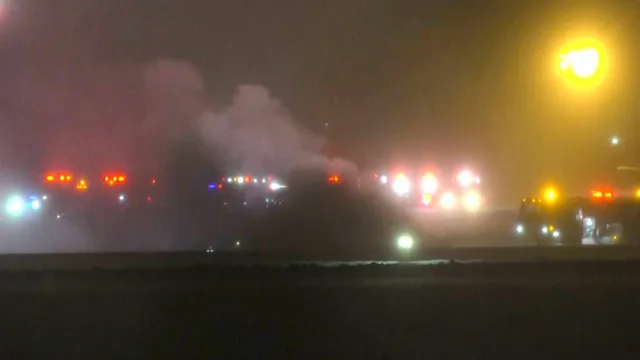
Private jet crashes during takeoff amid severe winter storm
Private jet crashes during takeoff amid severe winter storm
- A Bombardier Challenger 600 crashed during takeoff from Bangor International Airport at approximately 7:45 p.m. local time.
- Emergency crews responded to the scene, and the airport was subsequently closed due to the incident.
- The FAA and NTSB will investigate the crash, which occurred amidst significant winter storm conditions in the Northeast.
Story
On Sunday evening, a private jet carrying eight people experienced a tragic crash during its takeoff from Bangor International Airport in Maine. The incident occurred at approximately 7:45 p.m. local time amid challenging weather conditions associated with a severe winter storm affecting the Northeast of the United States. This storm brought heavy snowfall, low visibility, and frigid temperatures, complicated by winds out of the northeast at roughly 10 mph, with a chilling windchill factor that made conditions even more difficult. The aircraft involved was identified as a Bombardier Challenger 600, which took off from the airport despite the adverse weather. Following the crash, the airport underwent immediate closure, prompting emergency crews to respond swiftly to the scene. However, there were no immediate updates regarding the conditions or identities of the individuals on board the aircraft. As emergency responders worked to assess the situation, the airport urged the public to avoid the area to facilitate their efforts. Visibility at Bangor International Airport was constrained during the takeoff due to the winter storm, with reports indicating that pilots had faced challenges before the crash. The Federal Aviation Administration (FAA) and the National Transportation Safety Board (NTSB) have both been notified and are set to investigate the circumstances surrounding the incident to determine the cause and ensure that such occurrences are prevented in the future. This crash comes in the wake of a widespread travel disruption across the United States, with thousands of flights canceled and delayed due to the storm's effects. Authorities indicate that as the weather system continues to affect a significant portion of the northeastern region, ongoing safety concerns for air travel remain at the forefront of discussions. The FAA is expected to release a preliminary accident report, detailing additional findings from its investigation as soon as possible. The incident highlights the critical need for awareness regarding adverse weather conditions and the essential protocols that must be followed during such situations.
Context
Winter storms pose significant challenges to aviation safety, impacting flight operations and increasing the potential for accidents. These storms commonly bring hazardous weather conditions such as heavy snowfall, ice accumulation, and strong winds, which can create dangerous situations for both pilots and ground crews. The effects of winter storms are multifaceted, influencing various aspects of aviation, including aircraft performance, navigation, and emergency response protocols. As airlines and airports strive to maintain schedules during adverse weather, the need for effective management strategies becomes paramount to ensure safety and efficiency in operations. Aircraft performance can be severely affected by winter weather conditions. Ice accumulation on wings and control surfaces alters aerodynamics, increasing stall speeds and reducing lift. Pilots must contend with diminished visibility caused by snow and fog, complicating takeoff, landing, and internal navigation. Moreover, runway conditions can deteriorate, leading to increased stopping distances and potential loss of control during taxi, takeoff, and landing phases. To mitigate these risks, regular maintenance of aircraft de-icing and anti-icing systems is crucial, as is adherence to rigorous pre-flight checks, particularly during winter months. In addition to flight operations, winter storms impact ground logistics and airport functionality. Snow-covered runways must be cleared promptly to minimize delays and maintain safety standards. Snow removal operations are labor-intensive, requiring coordination between airport management and specialized ground crews. Furthermore, the availability of de-icing chemicals and equipment is essential in ensuring that aircraft can safely depart and arrive at their destinations. Effective communication between meteorologists, air traffic control, and airline operations teams facilitates a real-time understanding of changing weather conditions, allowing for timely adjustments to flight schedules and support services Ultimately, the preparation and response to winter storms in aviation dictate overall safety outcomes. Continued investment in technology, such as advanced weather forecasting systems and improved de-icing technology, can reduce the risks associated with winter storms. Training for pilots and ground crews on handling adverse weather situations ensures that personnel are well-equipped to respond effectively. By acknowledging the impact of winter storms and implementing comprehensive safety protocols, the aviation industry can enhance its resilience and safeguard against the inherent risks posed by winter weather.


