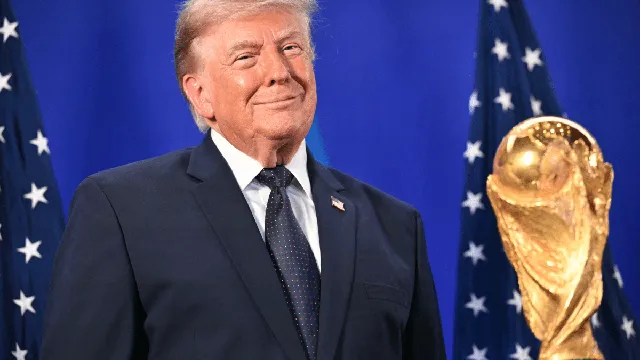
In March 2025, FIFA announced a plan to establish a $20 billion commercial subsidiary called FIFA Forward Enterprise (FFE) aimed at managing the World Cup and other tournaments. This initiative is part of FIFA's broader strategy to enhance funding for its 211 member associations, allowing them to access up to $20 million each through a new FIFA Fast Forward Programme. The proposal has sparked controversy, particularly from UEFA, which expressed concerns about the potential for private investors to influence football governance and operations. FIFA maintains that the subsidiary will not turn the organization into a for-profit entity and that it will retain control over all sporting decisions.
The announcement coincided with FIFA's opening of a representative office at Trump Tower in New York, highlighting the connections between FIFA, the Trump administration, and private investment. FIFA President Gianni Infantino and Donald Trump were present at the office's inauguration, further intertwining the worlds of sports and politics. The relationship has raised eyebrows, especially given the involvement of Joshua Kushner, a known investor linked to the Trump family, although FIFA clarified that neither Jared Kushner nor Joshua Kushner would have a direct role in the FFE.
FIFA's proposal is not the first attempt to bring private capital into its operations. In 2018, Infantino had previously pushed for a $25 billion investment plan linked to new competitions, including an expanded Club World Cup. The current proposal, however, is framed around a FIFA-owned subsidiary that would allow for minority investments while ensuring that football operations remain under FIFA's control. The organization aims to unlock commercial value that has not been captured in the past, with the funds intended for long-term development projects such as stadiums and training centers.
Despite FIFA's assurances, UEFA's concerns reflect a broader unease within the football community regarding transparency and the potential for conflicts of interest. UEFA has emphasized that the governance and integrity of football should not be treated as commodities, especially without clear transparency regarding financial gains. As FIFA seeks to expand its commercial reach, it faces the challenge of convincing stakeholders that the proposed structure will not compromise the sport's core values and governance.