

US military retaliates with strikes on Islamic State targets in Syria
US military retaliates with strikes on Islamic State targets in Syria
- The US military launched over 30 strikes on Islamic State targets in Syria as a retaliation for a deadly ambush that killed two US soldiers and a civilian.
- The attacks took place between February 3 and 15, focusing on weapons storage and infrastructure.
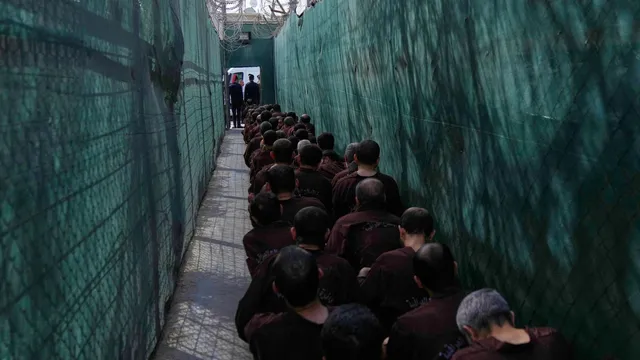
- This military campaign aims to keep relentless pressure on the Islamic State organization and comes alongside a recent transfer of IS prisoners from Syria to Iraq.
Story
In early February 2026, the US military carried out over 30 strikes against Islamic State (IS) targets in Syria. This military action was a response to an ambush that took place two months prior, resulting in the deaths of two US soldiers, Edgar Brian Torres-Tovar and William Nathaniel Howard, along with an American civilian interpreter, Ayad Mansoor Sakat. The strikes targeted weapons storage facilities and other components of IS infrastructure in an effort to maintain continuous military pressure on the terrorist organization. The operations, conducted by US Central Command (CENTCOM), included a variety of precision munitions delivered by fixed-wing and rotary-wing aircraft, as well as drones. The assault occurred as part of Operation Hawkeye Strike, which was initiated following the fatal attack on US and Syrian forces in Palmyra. This operation reflects ongoing efforts to dismantle the remaining elements of the IS network after its declared caliphate was largely destroyed by US-led coalition forces. In addition to the strikes in February, US forces also executed five earlier attacks on a critical communications site and weapons storage facilities between January 27 and February 2. Over the course of two months of targeted operations, more than 50 IS terrorists have been killed or captured and over 100 IS targets have been hit, indicating a sustained commitment to weakening IS capabilities in the region. This military strategy also coincided with the recent transfer of thousands of IS prisoners from Syria to Iraq for legal proceedings. This transfer was welcomed by authorities, further illustrating the coalition’s ongoing efforts to combat IS and ensure those involved in the group face justice. Meanwhile, the situation remains complex as Syria's defense ministry announced that the Al-Tanf military base, previously controlled by US troops, now falls under their jurisdiction, signaling a shift in military control and operations in the region.
Context
The US military strategy against the Islamic State (IS) has evolved significantly since the group emerged as a formidable threat in the early 2010s. Initially, the US focused on a combination of airstrikes and training local ground forces in Iraq and Syria. As IS captured large territories and conducted violent campaigns, the urgency for a more robust military strategy became imperative. The strategy involved a multi-faceted approach that integrated intelligence gathering, coalition building, and direct military intervention to dismantle the Caliphate and degrade the operational capabilities of IS. This coordination not only targeted leadership and logistical networks but also aimed to cut off funding sources, disrupt propaganda efforts, and mitigate the potential for foreign fighters joining the ranks of the group. Central to the US military effort was the development of the Syrian Democratic Forces (SDF), a coalition of Kurdish and Arab fighters who played a critical role on the ground. Their collaboration with US forces facilitated significant territorial losses for IS, notably the recapture of Raqqa, the de facto capital of the Islamic State, in 2017. This partnership was crucial to the overall strategy, as it allowed for a relatively low-cost method of engagement while avoiding the complexities of a large ground invasion. Support was not limited to military might; the strategy also included a commitment to stabilizing retaken areas, working with local councils to provide governance and essential services to help prevent the re-emergence of extremism. In addition to direct military action, the US strategy has emphasized the importance of international collaboration. The creation of a broad coalition involving over 80 partner nations has enabled the pooling of resources, sharing of intelligence, and coordination of efforts against IS. This coalition has been instrumental in conducting airstrikes, providing humanitarian assistance, and engaging in capacity-building initiatives across affected regions. The US has consistently advocated for a holistic approach that involves not just military defeat, but also economic development and ideological counter-narratives to undermine IS’s recruitment capabilities and appeal. The long-term success of this strategy hinges on civil society's resilience and the ability to offer an alternative to IS’s extremist ideology. As the landscape of threat evolves, so too does the need for adaptability in military strategy. While the territorial ambitions of IS have been significantly diminished, the group has transitioned into an insurgent organization capable of carrying out sporadic attacks and inspiring lone wolf operations around the globe. The US military strategy thus continues to adapt by focusing on counter-insurgency operations, intelligence-sharing with allies, and the preemption of terrorist activities. Moreover, the US remains committed to the principle of supporting local governance and security forces to reduce the vacuum that extremists often exploit. Successfully neutralizing the Islamic State requires ongoing commitment, vigilance, and a multi-dimensional approach that blends military, diplomatic, and economic tools to secure lasting stability in the region.


