

Macron warns of instability amid US economic pressure
Macron warns of instability amid US economic pressure
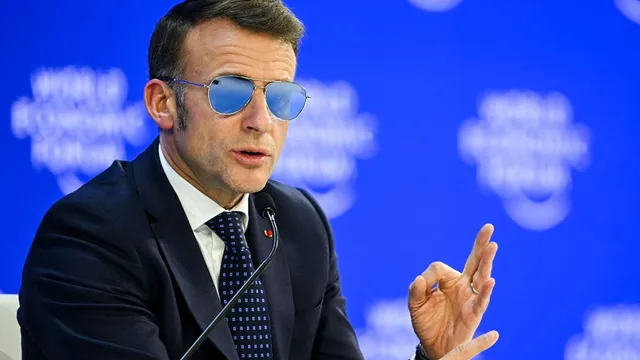
- Emmanuel Macron highlighted his eye condition as harmless before his speech.
- He criticized US trade policies which threaten European interests.
- Macron's speech indicated a need for European unity in facing geopolitical instability.
Story
In Switzerland, at the World Economic Forum on January 20, 2026, French President Emmanuel Macron addressed global leaders, drawing attention to a potentially precarious international landscape. He emphasized growing instability and imbalances in geopolitical relations, urging European leaders to defend their sovereignty against aggressive trade policies from the United States. Macron's speech came on the heels of escalating tensions with the US, sparked by President Donald Trump's recent threats of tariffs targeting European nations which opposed his intentions toward Greenland. Macron conveyed that Europe must prioritize collaboration while resisting any coercive measures employed by the US government. Days before his address, Macron had publicly acknowledged experiencing a minor but visible eye condition, joking about it during a military address in France. Despite his lighthearted demeanor, the serious undertones of his remarks at Davos highlighted a crucial moment for Europe in the face of ongoing trade disputes. He criticized Washington for imposing tariffs that he deemed fundamentally unacceptable and detrimental to European export interests, signaling a shift towards a more assertive European economic stance. Macron's observations reflected a broader discontent regarding America's unilateral decision-making in trade practices, likening them to a “new colonial approach.” In light of rising autocracy and normalized conflict within global politics, Macron stressed the necessity of upholding respect and rule of law over brute force. During his address, he stated that Europe's position should not bend to the so-called 'law of the strongest', reinforcing the EU's intentions to maintain independence and unity in international affairs. Macron's call for resilience and solidarity among European nations signifies a strategic pivot, as he seeks to bolster European autonomy in a rapidly evolving geopolitical landscape, particularly under the tumultuous dynamics presented by Trump’s administration. The former promise of collaboration seems to have turned into a call for resistance. This moment at Davos highlighted a critical juncture not only for European cooperation but also for the US’s relations with its allies. Macron’s stern warning about the implications of trade wars echoed across the forum, casting concerns about a future where economic coercion could lead to greater divides. European leaders are now urged to consider powerful trade responses to protect their interests, including potential retaliation against USA’s tariffs. As tensions rise, Macron's remarks serve as a precursor to the necessary diplomatic maneuvers Europe must undertake to navigate an increasingly complex global arena, illustrating the delicate balance between maintaining alliances and standing firm against unilateral demands.
Context
The European Union's trade response to U.S. tariffs has been a critical aspect of international trade relations since the imposition of tariffs on various goods, particularly in key sectors such as steel, aluminum, and agriculture. In retaliation to these tariffs, the European Union has been compelled to craft a strategic approach that not only addresses the economic implications for its member states but also seeks to preserve the integrity of the multilateral trading system. This response includes a combination of safeguards, countermeasures, and diplomatic negotiations aimed at mitigating the adverse effects of U.S. tariffs while asserting the EU's commitment to free trade principles. One of the primary tactics employed by the EU has been the implementation of retaliatory tariffs on U.S. goods. In June 2018, the EU announced a series of tariffs on American products, targeting a wide array of items, including whiskey, motorcycles, and agricultural goods. This move was intended to provide relief for European industries that were adversely affected by U.S. tariffs on steel and aluminum. The EU's approach seeks to apply pressure on U.S. industries and legislators to reconsider their tariff policies, illustrating the interconnectedness of global trade and the potential repercussions of protectionist measures. Additionally, the EU has engaged in formal dispute settlement processes through the World Trade Organization (WTO), arguing that the U.S. tariffs violate international trade rules. By taking this route, the EU aims to strengthen its legal standing and foster support from other member nations similarly affected by U.S. trade policies. This multilateral framework not only seeks a resolution to the current impasse but underscores the EU's commitment to preserving a rules-based order in global trade that can mitigate further escalation of trade tensions. The future of EU-U.S. trade relations remains uncertain, contingent on shifts in domestic policies and international dynamics. The European Union continues to advocate for dialogue and negotiation as means to resolve trade disputes, while simultaneously preparing for any potential further U.S. trade actions. By balancing reactive measures with proactive diplomacy, the EU aims not only to protect its economic interests but also to reinforce alliances that can serve as counterweights to unilateral trade actions, thereby fostering a more cooperative global trade environment.


