

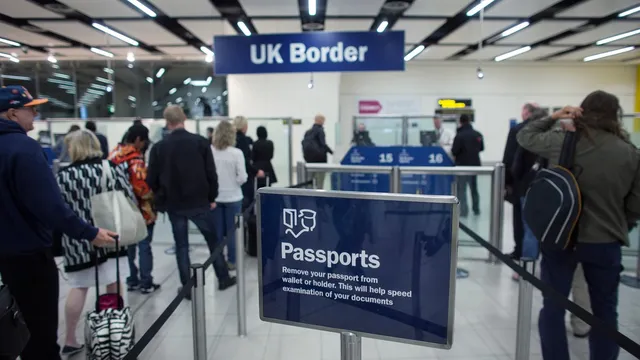
Aer Lingus mandates passports for travel between Great Britain and Ireland
Aer Lingus mandates passports for travel between Great Britain and Ireland
- Starting February 25, 2026, passengers traveling between Great Britain and Ireland on Aer Lingus must present a valid passport.
- Historically, no passport has been required for British and Irish citizens traveling within the Common Travel Area.
- The decision aligns with Ryanair's existing policies and aims to improve operational performance for airlines.
Story
On February 25, 2026, Aer Lingus will implement a new travel policy requiring all passengers traveling between Great Britain and Ireland to present valid passports. This policy change aligns Aer Lingus with Ryanair, which has already adopted similar measures. Historically, there has been no requirement for Irish and British citizens to carry passports while traveling within the Common Travel Area (CTA), which encompasses the UK, Ireland, the Isle of Man, and the Channel Islands, established in 1923. The Irish government maintains that this is not an immigration requirement; however, the airlines are implementing stricter identification requirements. Previously, Aer Lingus accepted various forms of photo ID including driving licenses, work ID cards, and international student cards for travel between the two countries. The spokesperson emphasized that the new passport requirement is intended to enhance operational performance and consistency across their network, despite the government asserting that British and Irish citizens do not need passports for travel within the CTA. Distinctly, travelers using British Airways can still travel without passports on specific routes to Dublin as the airline adheres to different identification standards. Furthermore, ferry companies remain flexible with their identification requirements, continuing to accept alternative forms of ID. The introduction of the passport mandate has sparked concerns regarding potential confusion for passengers purchasing tickets through airlines like British Airways, which offers Aer Lingus flights without clear notification of the new requirements.
Context
The Common Travel Area (CTA) regulations established between the United Kingdom, the Republic of Ireland, the Isle of Man, and the Channel Islands create a unique framework that allows free movement of individuals across these jurisdictions. These regulations were historically rooted in agreements that facilitated travel without the necessity of passport checks or visa requirements for citizens of these areas. As of February 2026, the regulations and their implications have become increasingly pertinent, particularly in light of changing political landscapes and evolving immigration policies post-Brexit. The efficiency of the CTA in maintaining an open border regime has been significant for travel, trade, and economic interactions between the UK and Ireland, especially in Northern Ireland, which shares a border with the Republic of Ireland. This dynamic has brought the need for clear regulations to ensure fluid movement while addressing security and immigration concerns that may arise from the absence of standard border controls. It necessitates a balance between maintaining security and promoting economic continuity in the region. In recent years, discussions around the CTA have included considerations such as how travelers from outside these areas might be processed. The general framework dictates that while travelers from one part of the CTA can move freely, there is a need for robust systems to manage entries from non-CTA countries. The regulations must adapt to the needs of various stakeholders, including the need for inspections to prevent illegal immigration and ensure that travel remains transparent and safe. This balance is particularly crucial as the world faces challenges such as global health crises and heightened security risks. Authorities are tasked with developing solutions that maintain free movement while implementing necessary checks that conform to established regulations. The implementation of digital health passports and other forms of technology could play a vital role in the evolution of CTA regulations. The introduction of such methods would provide a streamlined approach for verifying the health status of travelers, particularly in response to post-pandemic recovery efforts. Furthermore, such innovations could enhance the efficiency of border processes while preserving the essence of the CTA's open travel ethos. Policymakers must continue to communicate clearly with citizens and visitors alike to prevent confusion regarding travel rights and obligations under the CTA framework. In conclusion, the Common Travel Area remains a crucial component of travel and trade for the UK, Ireland, and the regions it encompasses. Its resilience is tested continuously amidst changing regulatory landscapes and external pressures. Addressing the ongoing and emerging challenges necessitates vigilance in maintaining its operational effectiveness while nurturing the spirit of cooperation and ease of movement that defines the CTA's significance. As we move forward, it is essential that dialogue continues among stakeholders, ensuring that the needs of all parties are met, and that the regulations adapt appropriately to our changing world.


