

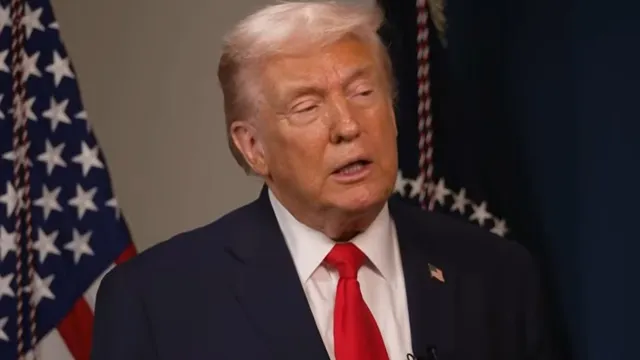
Trump narrows down selection for next Fed chair amidst tensions with Jerome Powell
Trump narrows down selection for next Fed chair amidst tensions with Jerome Powell
- Donald Trump has indicated that he has narrowed down his selection for a successor to Jerome Powell.
- A criminal investigation into Powell by the Department of Justice has further complicated the relationship.
- The choice of the new Fed chair is likely to reshape the central bank's direction significantly.
Story
In January 2026, Donald Trump indicated that he has likely selected a top candidate to replace Jerome Powell as chair of the Federal Reserve. Trump's relationship with Powell has been fraught with tension, exacerbated by various economic issues and criticism over Powell's handling of interest rates. Amidst this backdrop, Trump's Department of Justice launched a criminal investigation into Powell, focusing on alleged discrepancies related to a $2.5 billion renovation project at the Fed's headquarters, which Powell has vehemently disputed, claiming all actions are lawful and constitutional. This investigation has influenced the dynamics between Trump and Powell, further straining the Fed's independence from political pressure. Alongside Trump’s sustained criticism of Powell, two Republican senators have stated that they will place a hold on any nominations for Powell’s replacement until the investigation is resolved, reflecting broader concerns about the administration's efforts to erode the central bank’s autonomy. Regardless, Trump continues to express his intention to appoint a new Fed chair, reviewing potential candidates like Kevin Warsh, Christopher Waller, and Rick Rieder, with Warsh reportedly having the highest odds for nomination according to prediction markets. The upcoming decision is viewed as crucial, as it holds the potential to redirect the Federal Reserve's policies significantly.
Context
The selection of the Federal Reserve chair has a significant impact on the economy, influencing monetary policy decisions that affect inflation, unemployment, and economic growth. The chair's approach to managing interest rates and regulating the banking system can steer the economic landscape. For instance, a chair that prioritizes controlling inflation may adopt a more hawkish stance, raising interest rates to temper growth when inflationary pressures are present. Conversely, a chair who focuses on minimizing unemployment may be more dovish, keeping interest rates low to stimulate borrowing and investment, potentially leading to faster economic growth in the short term. As such, the chair's philosophy and policy preferences play a crucial role in shaping the American economic environment. Historical examples illustrate the profound impact of the Federal Reserve chair's actions. Under Alan Greenspan, the Fed adopted a policy of moderation, which has been credited with fostering an unprecedented period of economic stability and growth during the 1990s. However, after the financial crisis of 2008, Ben Bernanke's approaches, including quantitative easing, aimed at propelling the economy from recession also spurred discussions about asset bubbles and long-term financial stability. The decision-making style and indicated priorities of each chair can create ripple effects throughout the economy, influencing market confidence and economic behavior of consumers and businesses alike. Furthermore, the chair's selection is often influenced by the prevailing political atmosphere, reflecting broader economic philosophies. For instance, during periods of economic crisis, there might be a tendency to choose someone who is perceived as a stabilizing force with extensive experience in crisis management. This can lead to the Fed adopting more unconventional monetary policies to combat economic downturns. Public perception of the chair also plays a role; a Fed chair with strong credibility can enhance the effectiveness of monetary policy, while one facing skepticism may find it challenging to achieve desired economic outcomes. Ultimately, the interplay between the Federal Reserve chair's beliefs and the dynamic state of the economy creates a complex environment that policymakers navigate. As economic conditions evolve, the Fed chair's responses to inflationary pressures or unemployment levels remain essential. Looking forward, the ramifications of each chair's selection delineate the essential role of leadership in shaping economic trajectories and highlight the careful considerations that the government must undertake in appointing a Fed chair that aligns with the country’s fiscal and monetary goals.


