

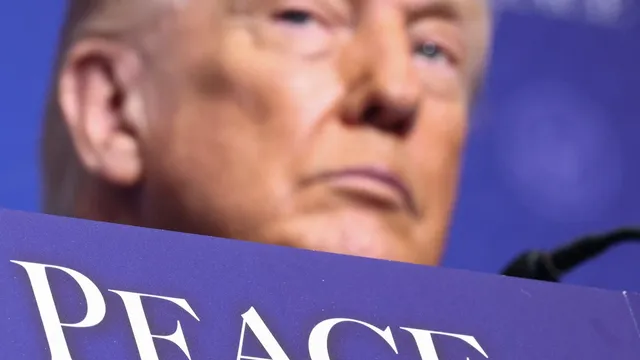
Trump pledges $7 billion to restore Gaza stability
Trump pledges $7 billion to restore Gaza stability
- Donald Trump's Board of Peace pledged $7 billion for Gaza reconstruction from nine member countries.
- Five nations committed to sending troops for an international stabilisation force focused on securing Rafah.
- Trump described the funding as an investment in stability, amid significant reconstruction needs.
Story
In late 2023, the United States hosted an important meeting in Washington, D.C., where Donald Trump's Board of Peace convened for the first time. Countries such as Kazakhstan, Azerbaijan, the United Arab Emirates, Morocco, Bahrain, Qatar, Saudi Arabia, Uzbekistan, and Kuwait pledged a total of $7 billion to aid in the reconstruction of Gaza, a territory severely impacted by a prolonged conflict between Israel and Hamas that lasted for two years. This financial commitment represents a small portion of the estimated $70 billion needed for full reconstruction. Additionally, countries including Indonesia, Morocco, Kazakhstan, Kosovo, and Albania agreed to send military personnel to form an international stabilisation force to support the effort on the ground, focusing initially on Rafah, a major population center within Gaza. This initiative comes on the heels of a fragile ceasefire established in October that year, aimed at easing tensions and facilitating the beginning of reconstruction in the war-torn region. Trump emphasized that every dollar committed to rebuilding Gaza is an investment in stability and represents hope for a harmonious future in the area. Furthermore, Egypt and Jordan undertook to provide training for police forces to ensure safety and security during this delicate phase of rebuilding. Beyond the immediate financial and military contributions, Trump's vision for the Board of Peace has evolved since its inception in August, expanding from solely addressing the Israeli-Palestinian conflict to potentially tackling various global conflicts. This has spurred some criticism, with expectations that the Board of Peace may serve as a counterweight to the United Nations in future international conflict management. In response to such concerns, Trump asserted that the United Nations would remain strong, with the board supporting its functions. The reaction from the international community was mixed, evidenced by the presence of representatives from around 50 nations at the Washington meeting, including observers from the United Kingdom, Germany, Italy, Norway, and Switzerland. While many countries showed support for the reconstruction efforts, challenges remain, primarily regarding security and ensuring that the aid reaches the intended beneficiaries without being diverted. As the conflict has historically shown, efforts to stabilize and reconstruct regions like Gaza are fraught with difficulties and complexities that go beyond mere financial contributions.
Context
geopolitical data impact policy insight strategic shift geopolitical shift global policy data economic global analysis impact shift impact policy data insight analysis market global insight shift geopolitical global strategic impact global strategic data market analysis shift market economic analysis strategic market shift trends market shift market geopolitical global data data geopolitical global geopolitical trends analysis data geopolitical policy market insight shift market trends trends economic insight trends analysis trends analysis analysis impact impact shift shift data insight global global strategic...


