

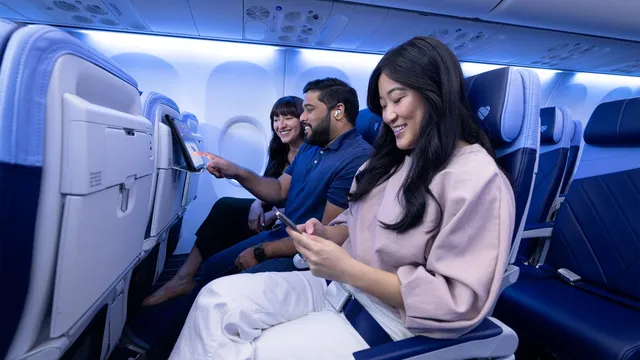
Southwest Airlines embraces Starlink Wi-Fi for superior in-flight connectivity
Southwest Airlines embraces Starlink Wi-Fi for superior in-flight connectivity
- Southwest Airlines is set to begin offering Starlink Wi-Fi service on its flights this summer.
- The service aims to provide passengers with speeds of up to 250 Mbps, improving streaming and gaming experiences.
- This shift reflects the airline's commitment to enhancing connectivity for travelers in a digital age.
Story
In the United States, Southwest Airlines is preparing to enhance its in-flight internet services by launching SpaceX's Starlink Wi-Fi this summer 2026. The airline plans to equip over 300 aircraft with this ultra-fast internet system by the end of the year. Currently, Southwest offers Wi-Fi services that range in speed from 20 megabits per second (Mbps) to 150 Mbps at its best, which has often resulted in buffering issues for passengers trying to stream content or play games during flights. The decision to adopt Starlink technology stems from the demand for better connectivity. Passengers expect seamless access to their favorite online activities while flying, especially as remote work and digital entertainment become increasingly integrated into daily life. Southwest's Tony Roach emphasized the airline's commitment to providing an 'at-home' experience in the air, allowing customers to stream shows, play games, and stay connected without interruptions. Starlink’s advantage lies in its unique operational framework, utilizing a vast constellation of over 9,000 satellites positioned much closer to the Earth than traditional satellite systems, which operate at 22,000 miles above the planet. The Starlink satellites orbit around 350 miles above the Earth, significantly reducing communication lag and improving reliability, especially during adverse weather conditions. This innovative approach to in-flight internet could redefine customer expectations and change the landscape of air travel connectivity. Southwest Airlines has yet to announce whether pricing for the Starlink service will differ from its current Wi-Fi offerings, which are priced at $8 per device for non-members, while Rapid Rewards loyalty members enjoy free access. As the rollout progresses and the completion of the fleet enhancement approaches, further announcements regarding the pricing and features of the new system are anticipated, potentially setting new standards in the aviation industry for in-flight connectivity.
Context
Starlink technology has emerged as a significant advancement in in-flight connectivity, promising numerous advantages for airlines and their passengers. By leveraging a network of low Earth orbit (LEO) satellites, Starlink provides high-speed broadband internet access that is superior to traditional satellite communications systems typically used by airlines. This technology minimizes latency and enhances overall connectivity quality, allowing airlines to offer a seamless browsing experience, high-definition streaming services, and improved access to corporate VPNs for business travelers. Additionally, the reliability of Starlink’s coverage is impressive, as it is designed to function well even in remote areas of the globe where other services may falter, thus greatly enhancing the overall customer experience during air travel. The cost-effectiveness of implementing Starlink services within the airline industry is another crucial advantage. Compared to existing systems, Starlink's operational costs are relatively low, making it an economically viable option for airlines looking to upgrade their connectivity offerings. This cost reduction is further amplified by the increasing demand for onboard Wi-Fi services, particularly among frequent flyers and business-class travelers who now expect uninterrupted internet access as an essential part of their flying experience. Consequently, airlines that adopt Starlink technology can attract more passengers, reduce churn, and enhance customer satisfaction, ultimately translating these factors into increased revenue. Moreover, Starlink integrates seamlessly into the existing airline infrastructure, allowing for quick and easy deployment capabilities. Airlines can retrofit their existing aircraft without significant downtime, hence minimizing disruptions to flight schedules. The technology is also highly scalable, meaning that airlines can initiate service on a limited basis and expand it in response to passenger demand over time. This flexibility allows airlines to manage resources effectively while still delivering high-quality connectivity. As an additional benefit, Starlink's service updates and maintenance require less effort compared to other competing systems, streamlining operations and reducing overhead. Lastly, the strategic adoption of Starlink's technology can enhance an airline's competitive positioning within the industry. As airlines continue to differentiate themselves based on customer service and amenities, those that incorporate advanced technologies such as Starlink may gain an edge over competitors lagging in connectivity offerings. By investing in such technologies, airlines not only improve immediate customer satisfaction but also position themselves as forward-thinking carriers in the marketplace. In summary, the advantages presented by Starlink technology for airlines include enhanced connectivity, cost savings, ease of implementation, and strategic differentiation, paving the way for a remarkable shift in passenger experience and airline service standards.


