

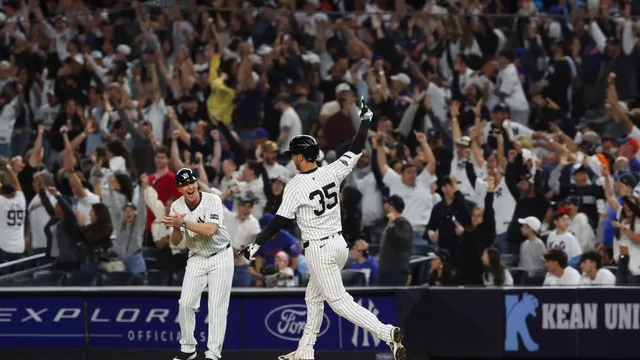
Kyle Tucker leaves Mets and Blue Jays behind for record Dodgers deal
Kyle Tucker leaves Mets and Blue Jays behind for record Dodgers deal
- Kyle Tucker, previously with the Chicago Cubs and Houston Astros, has signed a four-year contract with the Los Angeles Dodgers worth $240 million.
- The contract gives him the second-highest average annual value in MLB history at $60 million.
- This move significantly enhances the Dodgers' chances of contending for another championship in the upcoming season.
Story
In a significant move during the offseason, Kyle Tucker, a former outfielder for the Chicago Cubs and Houston Astros, agreed to join the Los Angeles Dodgers with a staggering contract worth $240 million over four years. This deal, finalized amid considerable speculation and interest from other teams, including the New York Mets and Toronto Blue Jays, marks a high point in Tucker's career following his struggles with injuries that limited his playtime to just 214 games over the past two seasons. Despite these setbacks, Tucker's performances have demonstrated his prowess as an all-around player, making him one of the most sought-after free agents in baseball. The Dodgers’ acquisition of Tucker, along with fellow free agent Edwin Díaz, represents a bold strategy aimed at securing their status as perennial contenders. The financial implications of these signings are enormous; at an average annual value of $60 million, this contract stands as one of the highest in Major League Baseball history, second only to Shohei Ohtani's recent deal. Moreover, due to crossing certain luxury tax thresholds, the Dodgers face additional penalties that significantly raise the total cost associated with these player acquisitions. While these expenses may be daunting, the team's strong revenue streams from various commercial deals and an extensive fan base provide a buffer against the financial strain. The Dodgers' front office, led by Andrew Friedman, has typically maintained a cautious approach towards trades, favoring the retention of young talent in their robust farm system. However, the decision to sign Tucker and Díaz, both of whom come with substantial financial commitments, indicates a shift toward a win-now mentality, significantly raising expectations for the team's performance in the upcoming season. With a batting lineup that now features stars like Mookie Betts and Freddie Freeman in addition to Tucker and Ohtani, the Dodgers are poised to set new offensive records and contend for a three-peat in the World Series. The signing also prompted notable reactions across the baseball community, particularly among fans of the Mets and Blue Jays, who had hoped to secure Tucker as part of their rosters. Mets owner Steve Cohen publicly expressed disappointment on social media, reflecting the frustration felt by fans following the departure of a top-tier free agent to a rival team. This contract ultimately signals a blend of hope and concern in the baseball world, raising questions about the balance of competitive fairness in the league and the ongoing chase for championship glory by teams willing to invest heavily in their rosters.
Context
The impact of luxury tax on Major League Baseball (MLB) teams has been a topic of significant discussion among franchise owners, players, and fans. The luxury tax system, formally known as the Competitive Balance Tax (CBT), was established to promote competitive equity across the league by discouraging excessive payroll expenditures. Teams that exceed a specified payroll threshold are subjected to a tax that escalates with the amount exceeded and the number of consecutive years a team surpasses that threshold. The funds collected from this tax are redistributed among teams with lower payrolls, reinforcing the intended goal of leveling the playing field in the standings and fostering a more competitive atmosphere within MLB. This tax is particularly noteworthy as it delineates the financial landscape in which teams operate, particularly those willing to invest heavily in talent versus those constrained by financial realities. As a result, teams' strategies concerning player acquisitions, salary negotiations, and overall roster management are undeniably influenced by the implications of the luxury tax. Different teams have approached the luxury tax with varying strategies. For instance, teams that consistently exceed the threshold, such as the New York Yankees and Los Angeles Dodgers, often engage in high-stakes spending to secure top talent. This willingness to incur luxury tax penalties can be attributed to a strong revenue stream from local and national broadcasting deals, merchandising, and increased ticket sales stemming from competitive performance. Conversely, franchises operating on tighter budgets may adopt a more conservative approach, choosing to develop young talent through their farm systems and emphasizing financial sustainability over immediate success. By doing so, they try to avoid penalties associated with the tax, allowing for greater financial flexibility that can be critical for long-term viability. Moreover, the luxury tax has also sparked discussions about its effects on player salaries and market dynamics. Critics argue that the tax system contributes to wage stagnation, as teams may become hesitant to pay top dollar for free agents if doing so risks exceeding the payroll threshold. This can lead to a more polarized market where only a handful of teams engage in bidding wars for premier talent, thus reinforcing the very distinctions the luxury tax seeks to mitigate. On the other hand, proponents contend that the tax serves to incentivize teams to operate within their means and encourages creative management of resources. They posit that the luxury tax could spur teams to invest more in scouting, player development, and innovative approaches to building competitive rosters within the confines of their budgetary limits. Ultimately, the luxury tax represents a complex and vital mechanism in the overall financial structure of Major League Baseball. As the league evolves, discussions surrounding the luxury tax will remain paramount, especially regarding potential revisions in the Collective Bargaining Agreement negotiations. Stakeholders across the spectrum—from team owners to players and fans—will continue to evaluate its effectiveness in promoting competitive balance while reflecting on its long-term implications for the game's economic landscape. The impact of the luxury tax is not only a matter of financial analysis but also a question of the future of fairness and competition in baseball.


