

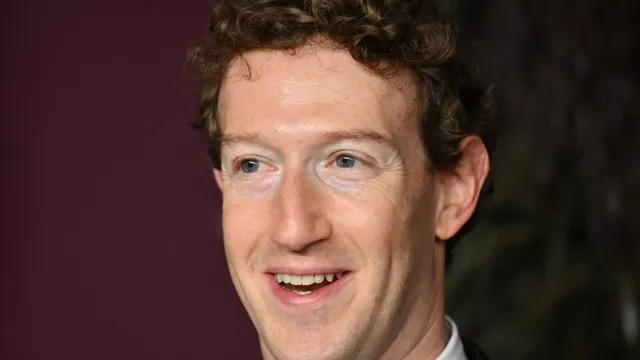
Zuckerberg donates $50 million to boost California's education in STEM and AI
Zuckerberg donates $50 million to boost California's education in STEM and AI
- Mark Zuckerberg and Meta's $50 million donation will fund the redevelopment of Sacramento State's facilities.
- The gift enables student housing and state-of-the-art STEM and AI facilities as part of a broader initiative to support local education.
- Zuckerberg's investment in California contrasts with other billionaires relocating due to a proposed wealth tax, showing his commitment to the region.
Story
In January 2023, California Governor Gavin Newsom announced a significant donation from Mark Zuckerberg and Meta aimed at enhancing educational infrastructure at Sacramento State. The $50 million gift is designated for the development of state-of-the-art STEM facilities and the establishment of a dedicated AI center. This donation facilitates a major redevelopment project involving three vacant state office buildings, converting them into an academic campus that will also provide new student housing. The initiative aims to strengthen the talent pipeline for tech jobs, ensuring that students have access to quality education and affordable living options. This sizable contribution occurs amid a growing trend of wealthy individuals leaving California due to a proposed one-time wealth tax on billionaires, which could reach 5% on unrealized gains. Despite this challenging economic climate for billionaires, Zuckerberg has committed to investing in California rather than relocating, emphasizing his dedication to the local community. Notably, other wealthy figures including co-founders of Google and executives at prominent tech companies have relocated to avoid the financial implications of this tax. Alongside his donation, Zuckerberg has been restructuring his philanthropic efforts through the Chan Zuckerberg Initiative, which he established with his wife, Priscilla Chan, in 2015. Initially focusing on education and social justice, the initiative has been shifting towards science, AI, and health-related research. This strategic realignment reflects their prioritization of biomedical advancements, particularly through their Biohub network aimed at curing or preventing diseases. Zuckerberg has described this pivot as one of the most impactful pursuits of his philanthropic career. Overall, Zuckerberg's donation, along with his broader philanthropic strategy, showcases his commitment to fostering technological education and pioneering advancements in health, while also challenging the trend of billionaires withdrawing from California. His actions signal a belief in the state's potential and a desire to cultivate the next generation of tech leaders and innovators within its borders.
Context
The impact of wealth tax on billionaires in California has emerged as a significant topic of discussion in recent years, particularly as income inequality continues to widen. Proponents of a wealth tax argue that it can serve as a crucial mechanism for funding public services, addressing social issues, and redistributing wealth from the ultra-rich to the broader population. In California, where many of the nation’s wealthiest individuals reside, the implementation of a wealth tax aims to counteract the influences of extreme wealth concentration on local economies, particularly in the face of rising costs of living and housing insecurity. Advocates suggest that a well-structured wealth tax could generate substantial revenue for education, healthcare, and infrastructure, which are vital for fostering equitable growth across communities. However, the proposal of a wealth tax has also ignited concerns among billionaires regarding potential negative repercussions. Critics maintain that such a tax could incentivize wealthy individuals to relocate to states with more favorable tax policies, thus eroding the state’s tax base. This out-migration could also result in job losses, as billionaires often contribute significantly to job creation and entrepreneurship within their regions. Moreover, the complexities of assessing and collecting wealth taxes present additional challenges, as billionaires typically possess diverse assets that complicate accurate valuation. Therefore, the debate continues on how to effectively implement a wealth tax without triggering adverse economic consequences or driving wealthy individuals away. The impact of a wealth tax is multifaceted and remains a contentious issue among policymakers and economists. Historical evidence suggests that similar taxes implemented in other countries have not always been successful in generating sustained revenue over time. Furthermore, the potential administrative costs associated with instituting and enforcing a wealth tax could offset some of the intended benefits. Nevertheless, supporters emphasize the moral imperative of addressing wealth inequality, arguing that a wealth tax could help cultivate a more just society by reducing disparities and providing crucial resources to marginalized communities. As discussions regarding the wealth tax in California continue, it will be essential to monitor its unfolding implications on the state's economy and the behaviors of its wealthiest citizens. The challenge lies in crafting a tax policy that balances revenue generation with economic growth, ensuring that it does not disproportionately burden any single demographic. Insights gained from studies and pilot programs may offer guidance on best practices for implementation, potentially setting a precedent for similar measures in other states facing growing wealth inequality. The ongoing discourse will be vital as California seeks a sustainable model for wealth distribution that aligns with its progressive values and economic realities.


