

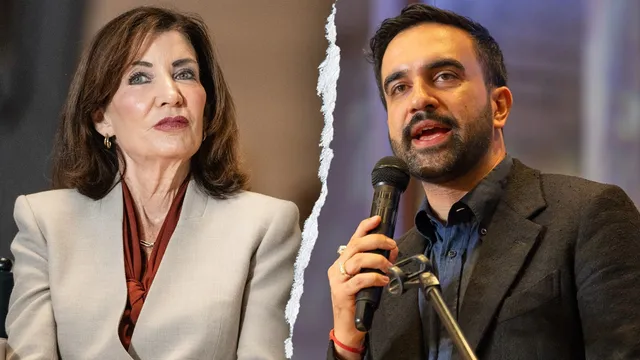
Zohran Mamdani endorses Kathy Hochul amid progressive backlash
Zohran Mamdani endorses Kathy Hochul amid progressive backlash
- Zohran Mamdani endorsed Kathy Hochul, emphasizing dialogue despite differences on tax policies.
- Hochul faces a primary challenge from the left, particularly her lieutenant governor, Antonio Delgado.
- Mamdani's endorsement has led to significant backlash from progressive allies and raised tensions within the party.
Story
In New York, Zohran Mamdani, the mayor who garnered national attention as a democratic socialist, endorsed Governor Kathy Hochul for her re-election bid. This endorsement, published in an op-ed in 'The Nation', took place as Hochul faced mounting challenges within her own party from more progressive elements. Throughout the endorsement, Mamdani acknowledged his disagreements with Hochul on key policy issues, particularly around the taxation of wealthy individuals, demonstrating the complex nature of political alliances in contemporary governance. His support is seen as crucial to bolster Hochul's position with progressive voters while highlighting his own leadership evolution. However, this endorsement has ignited backlash among some progressive and socialist groups who feel betrayed by Mamdani's choice. Critics argue that Hochul, known for centrist policies, has not fulfilled promises made during previous campaigns regarding wealth taxation and other progressive reforms. The significance of Mamdani's backing stems from his influence and heightened status within the party following his surprise victory in the Democratic mayoral primary last June. This situation further complicates Hochul’s upcoming primary, where as her lieutenant governor, Antonio Delgado, poses a challenge with a progressive platform designed to capitalize on Mamdani's successful rise in the political landscape. Additionally, the endorsement's reception from the progressive community reveals ongoing tensions within the Democratic Party, illustrating a broader ideological fracture. Figures like Delgado and his running mate, India Walton, voiced strong criticism, focusing on Mamdani's failure to commit to taxing the wealthiest New Yorkers, which they argue is essential for funding vital social programs. Mamdani's decision has therefore emerged not just as a personal choice but rather a pivotal moment that may influence the dynamics of the upcoming primary elections. As the primary approaches, the implications of Mamdani's endorsement could resonate well beyond New York City, impacting how left-leaning politicians navigate their relationships with centrist counterparts. This incident exemplifies the balancing act faced by progressive leaders today as they must often weigh electoral strategy against ideological commitments to their base. The fallout from this endorsement serves as a critical reminder of the complexities that define contemporary political alliances, especially as the party seeks to unify in the face of challenges from more conservative candidates.


