

Joe Rogan influences Trump's executive order on psychedelic drug research
Joe Rogan influences Trump's executive order on psychedelic drug research
- Joe Rogan discussed his cordial relationship with Trump and his influence on policy during his podcast.
- Trump signed an executive order aimed at accelerating psychedelic drug research and treatments.
- The collaboration highlights changing attitudes toward drug policy and mental health treatment in the U.S.
Story
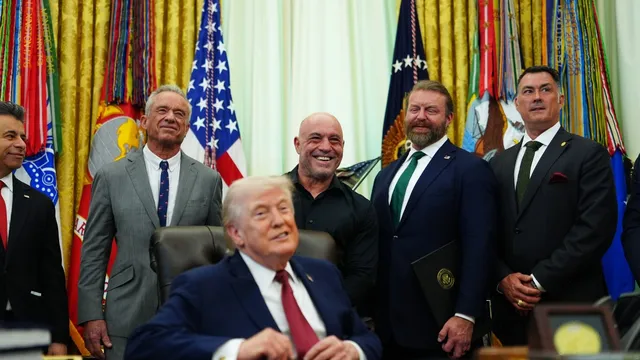
In the United States, prominent podcaster Joe Rogan recently discussed his cordial relationship with President Donald Trump during an episode of The Joe Rogan Experience. Despite some public disagreement, Rogan clarified that Trump was not angry with him when they interacted at a recent UFC fight, noting that he had conversed with Trump about the drug ibogaine and emphasized its potential effectiveness. Rogan stated that during their conversation, Trump showed interest in facilitating FDA approval for ibogaine, which ultimately led to the signing of an executive order directing federal agencies to expedite research on psychedelic drugs. On Saturday, Trump signed the executive order, aiming to enhance the availability of medical treatments based on psychedelic substances, particularly for serious mental health issues like PTSD for veterans. Rogan's influence in this matter has been significant; he was present during the signing ceremony in the Oval Office, highlighting his access to Trump despite some criticisms he has directed towards the administration regarding issues such as immigration enforcement and the Iran war. Both figures have maintained a relationship that straddles the line between criticism and support. Moreover, the executive order reflects a broader shift in drug policy under Trump, as it also legitimizes medical marijuana programs across states that have adopted them. This advancement is seen as particularly vital amidst ongoing conflicts that have significant economic implications, such as the rising costs of oil due to geopolitical tensions in the Gulf of Hormuz. In light of this administration's approach, influential voices like Rogan's could impact future policy directions, especially as public sentiment shifts and the socio-economic landscape evolves. The reaction to the executive order may pose further challenges to Trump's political standing among various voter demographics in the lead-up to the 2024 elections. Rogan's ongoing critique of various aspects of Trump's administration indicates a complexity in their dynamic; he critiques Trump while still being welcomed in high-profile settings, including the signing of this significant order. This nuanced relationship showcases the shifting narrative in American politics where unconventional alliances form, particularly in the face of pressing social issues like mental health and drug policy reform. Both Rogan’s and Trump’s interactions and discussions serve as a reflection of evolving attitudes toward drug use and treatment in the United States, marking a noteworthy shift in health policy influenced by public figures.
Context
The current status of marijuana legalization in the United States is a complex and evolving landscape as of April 2026. As of this date, a significant number of states have moved to legalize marijuana for both medicinal and recreational use, reflecting changing societal attitudes toward cannabis. Legalization efforts have gained momentum across various regions, with over 30 states and the District of Columbia having implemented some form of marijuana legalization. Both advocacy groups and state legislatures have played crucial roles in driving these changes, highlighting the shifting perception of marijuana from a prohibited substance to a viable commodity and therapeutic option. In the realm of recreational use, states such as California, Colorado, and Illinois are at the forefront, having fully legalized marijuana for adult consumption. These states have seen not only economic benefits, such as increased tax revenue and job creation, but also a decline in marijuana-related arrests. However, disparities exist, as some states have taken a more cautious approach, limiting legalization to medicinal purposes or maintaining strict prohibition. The patchwork of regulations across states has resulted in a situation where individuals’ access to marijuana varies greatly based on geographic location. On the federal level, marijuana remains classified as a Schedule I substance under the Controlled Substances Act, complicating legalization efforts and regulatory frameworks. Despite this, discussions around potential federal reform continue to gain traction, with proposals such as the MORE Act and the SAFE Banking Act being introduced in Congress to address various aspects of marijuana legalization. These proposed changes aim to facilitate banking access for cannabis businesses and deschedule marijuana, ultimately paving the way for a more unified approach to cannabis policy across the nation. Public sentiment regarding marijuana legalization has shifted substantially, with a growing majority of Americans now supporting legalization. Opinion polls consistently indicate that a significant percentage of the population endorses the legalization of recreational marijuana, emphasizing the disconnect between public opinion and federal policy. This changing tide suggests that further legislative developments may be on the horizon, with the potential for nationwide legalization within the next few years. Continued advocacy and grassroots campaigning will be essential in influencing policymakers and shaping the future of marijuana legalization in the U.S.


