

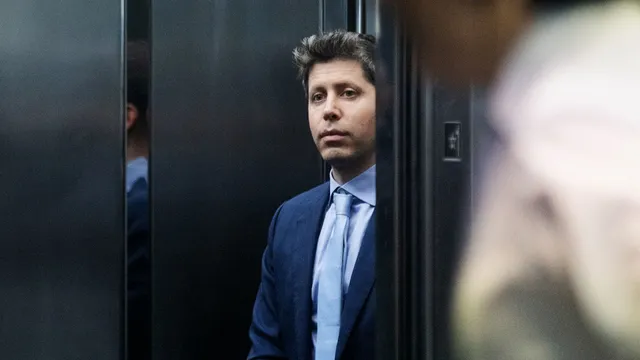
Sam Altman defends against Elon Musk's control allegations
Sam Altman defends against Elon Musk's control allegations
- Sam Altman testified in court defending OpenAI's mission against Elon Musk's claims.
- Musk attempted to gain control of OpenAI, even suggesting it could go to his children.
- The trial highlights the ethical concerns around AI governance and profit motives.
Story
In Oakland, California, a high-profile trial is unfolding involving Sam Altman, the CEO of OpenAI, and Elon Musk, co-founder of the organization. Musk has sued Altman and Greg Brockman, alleging that they have been enriching themselves at the expense of OpenAI's original nonprofit mission. The conflict dates back to OpenAI's founding in 2015 as a nonprofit research center, which later transitioned into a for-profit model that Musk heavily opposed. During the trial, Altman claimed to not understand Musk's allegations about looting a charity and noted that he found the claims 'difficult to wrap his head around.' Testifying on the ninth day of the trial, Altman explained that his vision for OpenAI was highly altruistic, contrasting with Musk's ambition for control which he claimed was rooted in a desire for profit and influence. Musk reportedly suggested that control of OpenAI could pass to his children after his death and attempted to take full control over the organization during the board's discussions. Altman expressed his discomfort with Musk's aspirations, calling it a major reason he did not want Musk to be the CEO or majority stakeholder of the for-profit arm, as he believed it would contradict OpenAI’s core mission Throughout the proceedings, Altman emphasized that he, along with co-founders Brockman and Ilya Sutskever, had concerns about the potential risks of allowing any single individual to have ultimate control over advanced artificial intelligence development, particularly given Musk's past comments indicating his desire for more direct oversight. As a result, the company created a nonprofit foundation overseeing the business, thus ensuring that OpenAI would be protected from individual control while still seeking financial investment. Altman described how Musk's influence was a persistent part of negotiations during the organization's formative years and noted that Musk opted out of investing in the for-profit subsidiary when it launched. This legal battle has highlighted the diverging philosophies of the key figures in AI development and raised questions about the direction and governance of AI technologies. The jury is expected to begin hearing closing statements soon, as both sides prepare to finalize their arguments in a case that underscores the conflict between profit motives and ethical considerations in artificial intelligence.


