
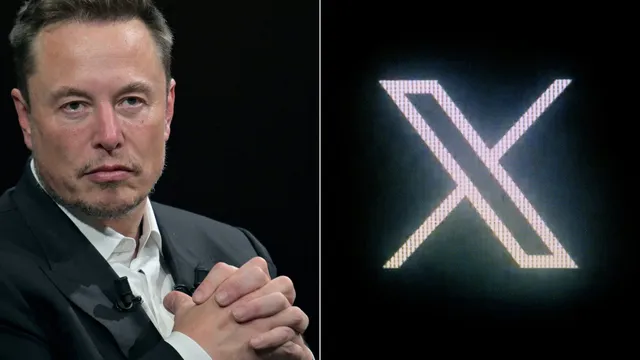
Elon Musk faces Paris court summons over serious allegations
- Paris prosecutors raided X's offices as part of a cybercrime investigation.
- Elon Musk and former CEO Linda Yaccarino are summoned for a voluntary hearing related to alleged violations involving AI-generated content.
- This investigation represents increasing scrutiny over big tech companies and their compliance with local laws in Europe.
Story
In France, prosecutors have conducted a raid on the offices of Elon Musk's social media platform X, which was formerly known as Twitter, as part of a cyber crime investigation. This investigation is particularly focused on allegations of distributing sexual deepfakes and potentially illegal content related to child abuse images, as well as Holocaust denial. Authorities are particularly interested in how algorithms and the AI chatbot Grok have been used, especially regarding the unauthorized use of images of individuals without consent. The tech billionaire has been called to voluntarily appear at a hearing scheduled for April 20, alongside Linda Yaccarino, the former CEO of X Corp. This investigation builds upon a year-long probe into how the platform operates under French law, leading to broader discussions about the tension between European regulations and U.S. tech companies. In their efforts, Paris prosecutors have emphasized a commitment to ensuring compliance with French laws for all companies operating within its jurisdiction. The raid was conducted by the National Cyber Unit of the French police in collaboration with Europol. The probe has prompted concerns about the potential implications for free speech, as X has previously described the investigation as politically motivated. It argues the legal actions could restrict speech and misinterpret French law. Earlier in 2023, X had received scrutiny from multiple regions for its content-related controversies. The EU had previously fined X for failing to effectively manage hateful and misleading content on its platform. Following these incidents, concerns about the implications of AI tools like Grok have escalated, particularly regarding their role in creating harmful content without proper safeguards in place. Musk and Yaccarino's upcoming questioning is aimed at gathering more information about the platform’s operational practices and its management of user-generated content, emphasizing the growing regulatory scrutiny faced by big tech firms in Europe. Also, the Information Commissioner's Office in the UK has expressed serious concerns regarding the data protection implications of Grok's AI-generated outputs, indicating that investigations are not limited to France. As various authorities collaborate and examine X's practices, the company remains critical of what it terms a politically motivated investigation, insisting that it upholds free speech principles. As discussions between EU and UK regulators continue regarding oversight of big tech companies, the outcome of this case may set precedents for future regulatory approaches in the tech industry.
Context
The advent of artificial intelligence (AI) tools has significantly transformed the landscape of social media regulation, presenting both unique challenges and opportunities for policymakers. With the exponential growth of user-generated content and the speed at which information spreads across platforms, regulatory bodies are increasingly faced with the task of ensuring that social media environments are safe, inclusive, and accountable. AI tools, equipped with advanced algorithms, have the potential to enhance the monitoring of content, address issues such as misinformation, hate speech, and cyberbullying, while also providing more sophisticated means of understanding user behavior and intentions. However, the deployment of these technologies must be approached with caution, as they can also lead to unintended consequences, including bias in enforcement and concerns regarding user privacy and data security. One of the primary impacts of AI on social media regulation is the ability to automate and scale monitoring processes. Traditional methods of content moderation, often reliant on human reviewers, can be slow and subject to human error, potentially allowing harmful content to proliferate. AI-driven tools can process vast amounts of data in real-time, identifying and flagging content that violates platform policies. Nevertheless, these technologies must be complemented by clear guidelines and human oversight to ensure that they are applied fairly and effectively. As regulators evaluate the effectiveness of these AI systems, there is a growing recognition of the importance of transparency in algorithmic decision-making to build trust with users and maintain accountability. Furthermore, the regulation of AI tools in social media requires a collaborative approach among various stakeholders, including tech companies, policymakers, civil society, and users. The complexity of AI systems necessitates ongoing dialogue to develop frameworks that balance innovation with regulatory compliance. While some countries are adopting more aggressive regulatory measures to govern the use of AI in social media, such as the EU’s proposed regulations aimed at fostering a digital single market while protecting user rights, this uneven regulatory landscape poses challenges for multinational platforms. Social media companies must navigate these regulations while implementing AI tools that adhere to varying legal requirements across jurisdictions. In conclusion, the impact of AI tools on social media regulation is profound, as they offer innovative solutions to longstanding issues while posing significant regulatory challenges. Policymakers must tread carefully, ensuring that regulations evolve in tandem with technological advancements. This requires a commitment to ethical AI development, comprehensive stakeholder engagement, and ongoing assessment of regulatory impacts. As we move forward, the balance between mitigating risks associated with AI and harnessing its potential for creating safer online spaces will be crucial in shaping the future of social media.
