

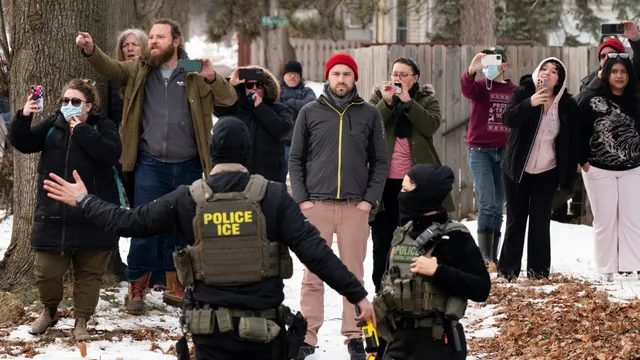
Minnesota immigration enforcement surge ends amid public protests
Minnesota immigration enforcement surge ends amid public protests
- Federal immigration enforcement officers' surge in Minnesota has officially concluded after weeks of unrest and protests.
- The operation, aimed at targeting undocumented migrants, resulted in around 4,000 arrests but faced backlash following two fatal clashes.
- The conclusion of the crackdown is seen as a victory for activists and local authorities, signaling a push for better support for immigrant residents.
Story
In Minnesota, a significant surge of federal immigration enforcement officers came to an end following weeks of tension and protests. The operation, under the direction of White House border czar Tom Homan, aimed to target migrants without legal status as part of the Trump administration's deportation policy. The presence of Immigration and Customs Enforcement (ICE) and Border Patrol agents in the state led to widespread unrest, culminating in deadly clashes that resulted in the deaths of two U.S. citizens in Minneapolis. The situation garnered national attention, prompting bipartisan scrutiny of immigration enforcement tactics. Governor Tim Walz remarked that the federal crackdown had been catastrophic for communities and businesses, emphasizing the need for a comeback and support for immigrant residents as the operation concluded. Homan claimed the operation had been successful, stating that approximately 4,000 arrests were made, though details regarding the criminal backgrounds of those arrested were not provided. Claims from federal officials indicated a decrease in sanctuary for criminals. The narrative surrounding the Minnesota operation shifted dramatically after the killings of Good and Pretti during confrontations with federal agents. In response to the escalating violence and public outcry, President Donald Trump replaced Border Patrol Commander Greg Bovino with Homan to regain control over the situation. The protests against ICE escalated on a national scale, reflecting growing outrage over the enforcement methods and the lives lost. As a result of the unrest and risks to public safety, Homan noted that a reduced presence would remain to ensure stability while transitioning governance back to local field offices. Despite claims of success, criticism regarding the implementation of such enforcement strategies lingered. The combination of community resistance and the tragic outcome of the enforcement surge indicates a complex relationship between federal immigration policy and local safety concerns.
Context
global insight shift data global global analysis market market analysis market shift analysis economic geopolitical trends analysis insight shift global impact insight global impact market global shift strategic strategic geopolitical policy shift strategic economic geopolitical shift geopolitical impact trends geopolitical market data policy global insight strategic strategic insight impact impact policy shift market geopolitical insight analysis policy data data trends economic impact shift policy impact insight strategic analysis market market global global strategic trends economic market analysis insight strategic policy...


