

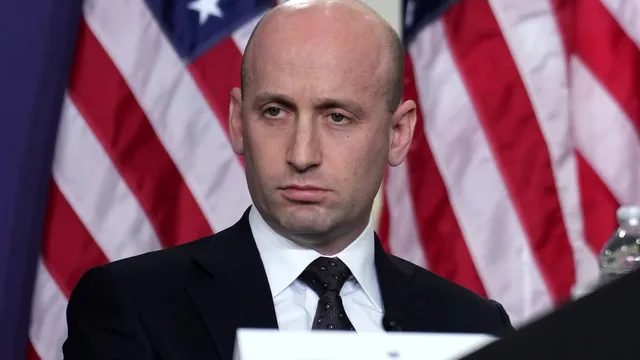
Stephen Miller pushes Texas to cut education funding for undocumented children
Stephen Miller pushes Texas to cut education funding for undocumented children
- Stephen Miller encouraged Texas Republicans to pass legislation limiting education funding for undocumented children.
- Miller's comments received mixed reactions from lawmakers, highlighting divisions within the party.
- If enacted, this legislation could significantly increase obstacles to education for undocumented children in Texas.
Story
In a recent meeting, White House Deputy Chief of Staff Stephen Miller urged Texas Republican lawmakers to introduce legislation that would restrict public education funding to only those children who are lawfully present in the United States. This meeting reportedly took place during a four-hour conference attended by various high-ranking officials, where Miller challenged lawmakers on their hesitation to act on his proposal, which contrasts with the established Plyler v. Doe ruling that mandates states to provide education to all children, regardless of immigration status. Approximately 100,000 children in Texas could be affected if such legislation is passed. Miller's push is part of a broader strategy amid concerns that the Republican party might lose control of Congress in the upcoming midterm elections. His remarks, targeting Texas as a potential testing ground for these policies, reflect both a desire for state-level action and a sense of urgency to consolidate party support before potential electoral losses. The uncomfortable silence that followed his challenge indicates hesitancy among some lawmakers about the broader implications of such a law. The proposal aligns with a growing sentiment among some conservative circles that emphasize prioritizing American citizens over undocumented individuals in accessing government services. Texas Governor Greg Abbott has also expressed support for the notion that American citizens should be prioritized in state funding decisions. However, this approach has drawn criticism from Democratic lawmakers, who argue that such policies do not represent the values of Texas and would adversely impact the state's growing Latino population. The legal ramifications of Miller's proposals are significant, given the historical context of Plyler v. Doe, which was decided in 1982. The ruling concluded that education is a fundamental right for all children within the state's jurisdiction, a precedent that Miller's proposals would directly challenge. The ongoing discussions in Texas reflect a larger national dialogue surrounding immigration policy and the rights of undocumented individuals, suggesting that coming electoral contests will increasingly revolve around these contentious issues.


