

U.S. military achieves milestone with first shipborne drone launch in the Persian Gulf
U.S. military achieves milestone with first shipborne drone launch in the Persian Gulf
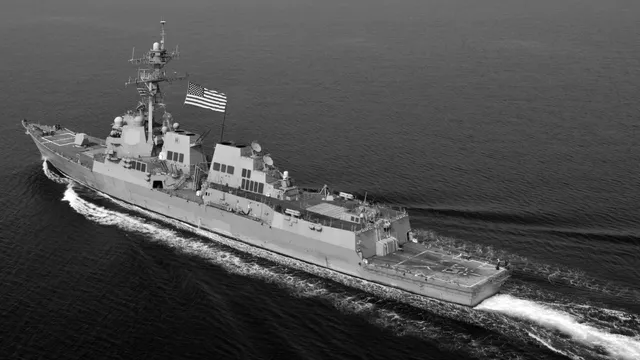
- The U.S. military launched the LUCAS drone from the USS Santa Barbara in the Persian Gulf on December 16, 2025.
- This operation marks the first-ever shipborne launch of a low-cost unmanned combat attack system.
- The introduction of LUCAS is expected to transform U.S. naval tactics and enhance regional security against emerging threats.
Story
The U.S. military has reached a significant milestone by launching a one-way attack drone from a naval vessel for the first time. On Tuesday, December 16, 2025, the low-cost unmanned combat attack system, referred to as LUCAS, was successfully launched from the USS Santa Barbara in the Persian Gulf. This operation marks a pivotal moment in U.S. naval drone warfare, particularly in a region where there is an ongoing threat from Iranian drones, which have also been deployed by Russia in Ukraine. The successful launch highlights the advancements in unmanned technology and the U.S. military’s response to emerging threats in maritime environments where regional security is a pressing concern. Naval Forces Central Command, which oversees the operation, stated that the LUCAS drone's initial launch did not specify whether it carried a live payload. The assignment of this drone to Task Force Scorpion Strike emphasizes a push toward developing and deploying cost-effective unmanned attack systems, underscoring the U.S. military's commitment to modernizing its operational capabilities. As they adapt to using drones in a one-way attack capacity, implications for future military engagements are considerable, particularly as Iran's Shahed drones pose a significant operational challenge. The LUCAS platform has been developed by Arizona-based contractor SpektreWorks and is intended for long-range autonomous missions. The drone is part of a broader initiative within the U.S. military to enhance air and naval capabilities through the employment of low-cost unmanned systems. While the precise range of the LUCAS drone remains unclear, it is suggested that it can operate over extensive distances with a cruising speed of 55 knots, emphasizing its potential effectiveness in the contested maritime spaces of the Middle East. Vice Admiral Curt Renshaw, the commander of NAVCENT/C5F, noted that this drone launch represented a key milestone in enhancing the navy's operational effectiveness and could significantly bolster deterrence efforts in regions of strategic interest. With military engagements evolving, the integration of new drone technology is expected to be pivotal in reshaping American tactics and increasing overall regional security. The launch also coincides with a new initiative by the Department of Defense to acquire a new fleet of drones, expanding the landscape of unmanned combat systems designed to address contemporary threats.
Context
The US military's use of drone tactics has evolved significantly over the past two decades, particularly in response to advancements in technology and changing warfare landscapes. Originally employed for reconnaissance missions, drones have become integral to modern combat operations, offering capabilities such as precision strikes, surveillance, and intelligence gathering. The evolution of drone technology has facilitated the development of highly sophisticated unmanned aerial vehicles (UAVs) capable of operating in various combat environments, enhancing operational effectiveness and minimizing risk to personnel. As a result, the integration of drones into military strategy has transformed traditional combat dynamics, allowing for remote engagement and real-time data analysis to inform tactical decisions. Drones have proven especially effective in asymmetrical warfare, where adversaries may not have access to comparable air power. The US has utilized drones extensively in counter-terrorism operations across regions such as the Middle East and North Africa, targeting high-value individuals and terrorist networks with a degree of accuracy that reduces collateral damage. These tactics have generated significant debate regarding their strategic implications, legality, and ethical concerns, particularly surrounding drone strikes that result in civilian casualties. Despite these challenges, military leaders argue that the advantages provided by UAVs, such as cost-effectiveness and enhanced situational awareness, justify their continued use in current operational frameworks. Furthermore, advancements in drone technology, including improved sensor systems and autonomous capabilities, are reshaping the battlefield. The integration of artificial intelligence and machine learning allows for sophisticated target recognition and engagement strategies without human intervention, which enhances operational efficiency but raises ethical questions around accountability and decision-making in warfare. As the US military refines its UAV tactics, the balance between leveraging technological advancements and adhering to the laws of armed conflict remains critical to maintaining international norms and mitigating potential backlash from the global community concerning the use of lethal force. Looking to the future, the US military is likely to continue investing in drone capabilities, focusing on enhancing interoperability with other branches of the armed forces and integrating drones into joint operations. The development of swarming tactics, where multiple drones operate in unison to overwhelm targets or conduct reconnaissance, represents the next frontier in drone warfare. Moreover, efforts are underway to bolster defenses against counter-drone technologies employed by adversaries, ensuring that US military drones can effectively operate in contested environments. The ongoing evolution of drone tactics will undoubtedly shape the next generation of military operations, underscoring the need for continuous adaptation to both technological advancements and the complex geopolitical landscape.


