

Aung San Suu Kyi endures 20 years in detention in Myanmar
Aung San Suu Kyi endures 20 years in detention in Myanmar
- Aung San Suu Kyi has spent a total of 20 years under detention in Myanmar.
- Her imprisonment included time under house arrest and resulted in a total of 27 years of jail sentences on dubious charges.
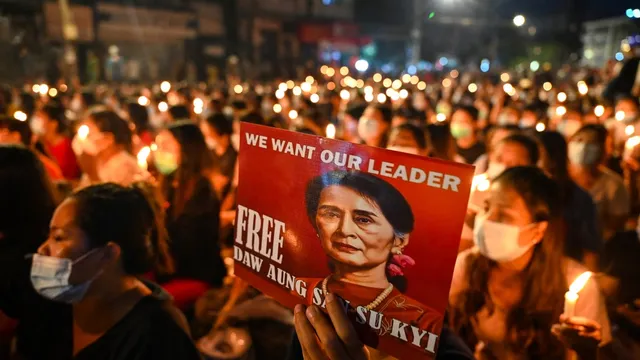
- Calls for her release highlight the desire for peace and political stability in Myanmar amid ongoing military rule.
Story
Myanmar has been under a military regime that has led to significant political strife and civil unrest. The country's democracy icon, Aung San Suu Kyi, has been a prominent figure in the struggle for democratic governance. Over the course of her political career, she has faced numerous arrests and detentions. Since her government was overthrown in a military coup in February 2021, she has spent five of her two total decades in detention, which has become a grim milestone for her and her supporters. Reports indicate that Suu Kyi faces prison conditions that are harsh and that details about her health remain largely undisclosed, inciting fears about her well-being. Her son, Kim Aris, voiced concerns regarding her health, suggesting that she could be suffering from serious complications. While the military junta claims she is in good health, the uncertainty surrounding her state raises alarms among her advocates. Calls for her release have intensified, underscoring the urgent need for dialogue and negotiations towards peace and stability in Myanmar. The military's opposition to her influence is evident as they continue to suppress political dissent and maintain their grip on power through controversial elections and actions aimed at quelling opposition. The humanitarian situation in Myanmar worsens as the military’s crackdown on dissent and armed resistance leads to civilian casualties and humanitarian crises. The ongoing civil war, marked by violence and repression, emphasizes the necessity for political engagement to end the cycle of conflict and oppression, with Suu Kyi as a symbol of hope for many in the pursuit of democracy.
Context
The Myanmar military coup that took place on February 1, 2021, marked a significant political upheaval in the Southeast Asian nation. The coup was orchestrated by the military, known as the Tatmadaw, which deposed the democratically elected government led by Aung San Suu Kyi and the National League for Democracy (NLD). The military justified its actions by alleging widespread electoral fraud during the 2020 general elections, in which the NLD won a landslide victory. Following the coup, the military declared a state of emergency for a year and transferred power to Commander-in-Chief Min Aung Hlaing. This sudden power grab prompted nationwide protests, civil disobedience movements, and a harsh crackdown by security forces, leading to widespread human rights violations and a humanitarian crisis in the country. The protests that erupted post-coup were met with extreme violence; security forces utilized live ammunition, rubber bullets, and tear gas against unarmed civilians. As reports of atrocities emerged, including arbitrary detention, torture, and killings, international condemnation grew. The military's actions led to the formation of the National Unity Government (NUG), comprising ousted lawmakers and ethnic leaders, which sought recognition and support from the international community. The NUG called for a federal democracy and an end to military rule, while resistance groups, including ethnic armed organizations, intensified their activities, leading to an escalation of armed conflict throughout the country. In response to the crisis, various countries and organizations imposed sanctions against Myanmar’s military leaders, aiming to pressure them to restore democracy and halt human rights abuses. Despite these efforts, the military remained largely unyielding, asserting control over major cities and rural areas. Reports indicated that the economy was severely impacted, with rising poverty and displacement due to ongoing violence and instability. Moreover, humanitarian access was severely restricted, exacerbating the plight of millions in need of assistance, including internally displaced persons and vulnerable communities. As of January 2026, the situation in Myanmar remains tense and uncertain, with the military still in power and the NUG and various resistance groups continuing their struggle for democracy. The international community remains concerned about the deteriorating human rights situation and the broader implications for regional stability. Discussions and efforts toward diplomatic resolutions are ongoing, yet the resolution of the crisis depends on a genuine commitment to dialogue and political reform by the military leaders. The future of Myanmar hangs in the balance, with hopes for a peaceful resolution seeming distant amidst continued violence and repression.


