

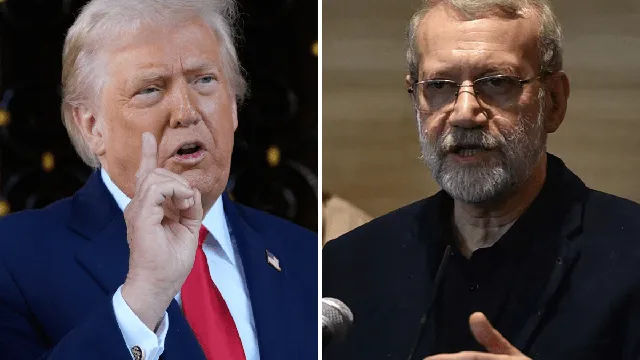
Trump threatens military action against Iran if nuclear program restarts
Trump threatens military action against Iran if nuclear program restarts
- Donald Trump warned Iran of military action if it rebuilds its nuclear program.
- Israel's Prime Minister Benjamin Netanyahu seeks US support for strikes against Iran.
- The US and Israel's cooperation suggests escalating tensions could lead to confrontation.
Story
In a recent meeting at his Mar-a-Lago estate, United States President Donald Trump emphasized the dedicated stance against Iran, specifically regarding its nuclear and ballistic missile programs. Trump stated that if Iran were to initiate any attempts to rebuild its nuclear capabilities or advance its missile technology, the US would take decisive military action. This warning comes in the context of ongoing dialogues with Israeli Prime Minister Benjamin Netanyahu, who is reported to be seeking US support for further military strikes against Iranian facilities, including their ballistic missile sites. Trump's comments highlight concerns raised by Israel regarding Iran's potential rearmament, established prior during confrontations between the two nations. The Israeli leadership has maintained that Iran's influence in the region presents a significant threat not only to Israel but to global security. Netanyahu's government is keen to pursue aggressive military options against Iranian advancements, holding the belief that proactive measures must be taken to prevent further escalation of Iran’s military capabilities. The backdrop for these discussions is a series of strikes previously carried out jointly by the US and Israel on Iranian nuclear sites, which sparked considerable conflict and condemnation from Tehran. In June of this year, a joint airstrike campaign targeted crucial sites within Iran's nuclear infrastructure, leading to escalated tensions in the region. Iran, however, has refuted claims of pursuing nuclear weapons, asserting their intentions of self-defense and calling the strikes violations of sovereignty. Nonetheless, US intelligence has suggested that Iran has been working on enhancing its missile programs, resulting in heightened stress in diplomatic relations, particularly between the US and Iran. Given the aggressive remarks from both Trump and Netanyahu, the situation remains precarious, with potential military repercussions looming. Officials in Iran have issued statements warning against further transgressions, threatening more detrimental responses if attacked again. The delicate nature of these relations indicates a tipping point, with observers speculating on the likelihood of further military engagement should diplomatic efforts fail. Any continued advancements in Iran's nuclear program could lead to heightened military responses from the US, backed by Israel, as highlighted by Trump’s definitive assertions during recent talks.
Context
The US-Iran nuclear agreement history is marked by a series of complex negotiations, evolving international relations, and significant geopolitical implications. The primary catalyst for these discussions was Iran's nuclear enrichment program, which the United States and its allies viewed as a potential pathway to developing nuclear weapons. In 2006, the UN Security Council began imposing sanctions on Iran in response to its refusal to halt its enrichment activities. These sanctions aimed to apply economic pressure on Iran to comply with international demands related to its nuclear program while spurring diplomatic negotiations among the involved parties. The breakthrough in the negotiations came with the election of Iranian President Hassan Rouhani in 2013, who was perceived as a more moderate leader. This shift in the Iranian political landscape opened the door to new diplomatic efforts, culminating in the Joint Comprehensive Plan of Action (JCPOA) in July 2015. The JCPOA involved Iran agreeing to significantly limit its nuclear program in exchange for the relief of sanctions that had significantly impacted its economy. Key provisions included reducing the number of centrifuges, limiting uranium enrichment to 3.67%, and allowing comprehensive inspections by the International Atomic Energy Agency (IAEA). Despite the promising initial framework of the JCPOA, the agreement faced challenges from both within Iran and the United States. Critics in the US contended that the deal did not sufficiently address Iran's missile programs or its regional activities, which contributed to heightened tensions in the Middle East. The most significant shift occurred in May 2018, when President Donald Trump announced the unilateral withdrawal of the United States from the JCPOA. This decision aimed to maximize pressure on Iran but ultimately led to Iran resuming its nuclear enrichment activities and escalating regional tensions. Following this development, various countries expressed their dissatisfaction with the US decision, particularly those involved in the agreement, including the UK, France, and Germany. In the aftermath of the US withdrawal, Iran gradually rolled back its commitments under the JCPOA, which further complicated the international landscape. Negotiations to revive the deal have occurred intermittently, with the Biden administration indicating a willingness to return to diplomacy. Efforts were made throughout 2021 and 2022 to reengage with Iran and negotiate terms that would address both the nuclear issue and regional stability. As of the end of 2025, the future of the US-Iran nuclear agreement remains uncertain, influenced by internal political dynamics in both countries, regional geopolitics, and the broader implications of nuclear nonproliferation efforts globally.


