

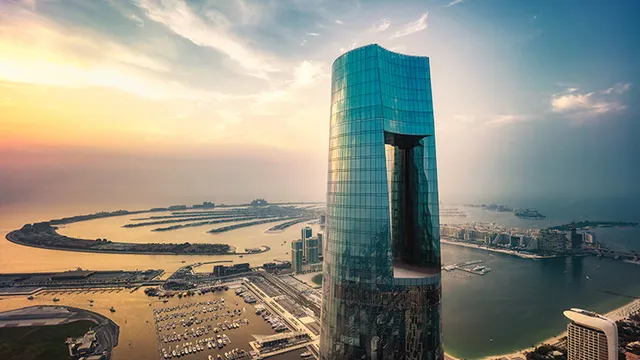
Dubai opens tallest hotel in the world, Ciel Dubai Marina
Dubai opens tallest hotel in the world, Ciel Dubai Marina
- Dubai Marina has opened the world's tallest hotel, Ciel Dubai Marina, at 377 meters high.
- This hotel features the highest infinity pool and aims to elevate the luxury tourism sector.
- The opening of the hotel continues Dubai's efforts to diversify its economy and bolster its global tourism image.
Story
In the United Arab Emirates, Ciel Dubai Marina officially started operations on November 18, 2025, marking its place as the tallest hotel in the world at 377 meters high. This impressive structure consists of 82 floors and is located in Dubai Marina, a scenic waterfront area noted for its high-rise residences and luxury amenities. The hotel is part of the InterContinental Hotels & Resorts (IHG) Vignette Collection, operated by First Group Hospitality, highlighting Dubai's commitment to enhancing its status in global tourism. Designed by the renowned NORR Group, the hotel integrates advanced architectural techniques, utilizing computer simulations and wind tunnel tests during its construction. This approach not only informed its final design but also ensured the building could withstand environmental challenges. In addition to luxurious accommodations, the hotel boasts the Tattu Sky Pool on the 76th floor, recognized as the world's highest infinity pool, surpassing previous records in Dubai. This extensive planning showcases Dubai's ambition to innovate in its architectural landscape. Dubai has been vigorously expanding its luxury-tourism sector, with Ciel Dubai Marina contributing to the emirate's strategic economic diversification away from oil reliance. The UAE government reported a continued rise in tourism, with 9.88 million international visitors recorded in the first half of 2025, a 6 percent increase from the previous year. As a significant contributor to the local economy, the hospitality sector remains a focal point of growth, with hotel occupancy rates at 80.6 percent. In its pursuit of architectural record-breaking ventures, Dubai's ambitious projects signal a broader trend in the Gulf region, notably in Saudi Arabia, which is equally aiming to diversify its economy through tourism and monumental developments. The collaboration between prominent real estate firms, including partnerships with the Trump Organization, emphasizes the interconnection of globalization in hospitality efforts, with both nations vying for a substantial impact on the global tourism scene.
Context
Tourism serves as a cornerstone of Dubai's economy, significantly contributing to its GDP and employment levels. With its strategic location, vibrant culture, luxurious lifestyle, and world-class infrastructure, Dubai has become one of the top tourist destinations globally. The government of Dubai has invested heavily in promoting the emirate as a premier travel destination, leveraging its vast array of landmarks, entertainment options, shopping experiences, and cultural attractions. The presence of iconic structures such as the Burj Khalifa, the Burj Al Arab, and the Palm Jumeirah has not only drawn millions of visitors annually but also cemented Dubai's identity as a global city synonymous with luxury and innovation. As a result, pre-pandemic statistics indicated that tourism contributed around 11% to Dubai's GDP, providing a critical source of income and employment opportunities for its population. The economic impact of tourism extends beyond mere GDP contribution; it also stimulates growth in various sectors such as hospitality, retail, and transportation. The hospitality sector, characterized by a diverse range of hotels from budget to luxury, employs thousands of residents, catering to the demands of a constantly growing tourist influx. Additionally, the retail market flourishes, with tourists spending significantly in malls and traditional souks, thus generating further revenues for local businesses. This interplay results in a multiplier effect that continues to bolster economic activities across multiple sectors. Moreover, transportation services, including taxis, ride-sharing, and the Dubai Metro, have witnessed increased demand, fostering advancements and expansions in the infrastructure to accommodate both residents and visitors alike. Events and exhibitions further enhance the role of tourism in Dubai's economy. The emirate hosts an array of international conferences, trade shows, and festivals that attract global audiences. The Dubai Shopping Festival, the World Expo 2020 (held in 2021 due to the pandemic), and various cultural gatherings serve as platforms to showcase the city’s offerings while simultaneously boosting hotel bookings, dining experiences, and entertainment options. These events create a transient economic boom, generating short-term spikes in employment and local consumption, which showcases Dubai’s ability to adapt and cater to the emerging preferences of tourists while maintaining a robust economic environment. Despite challenges posed by global events such as the COVID-19 pandemic, Dubai's tourism sector has demonstrated resilience and adaptability. Fostering innovative solutions, such as contactless experiences and enhanced health protocols, has been crucial to reassuring tourists and reviving the sector. The government's proactive measures to ensure safety and promote tourism, along with a growing trend of staycations and domestic travel, highlight a strategic pivot towards sustaining the economy amid uncertainties. As global travel gradually recovers, the long-term forecast for Dubai's tourism remains optimistic, promising continued economic growth and development, driven by an unwavering commitment to enhancing the visitor experience.


