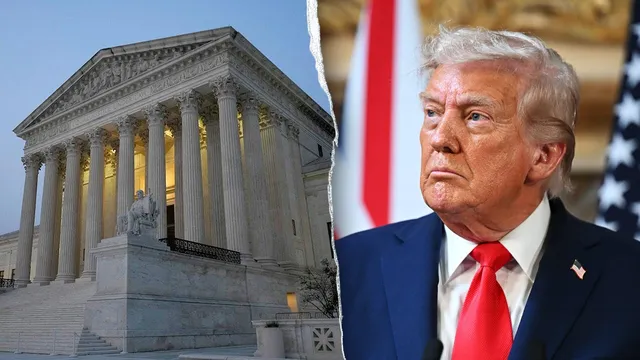
Trump seeks Supreme Court rehearing on birthright citizenship ruling
politics
controversial
provocative

Trump seeks Supreme Court rehearing on birthright citizenship ruling

20
(Update: )
president of the United States from 2017 to 2021
highest court in the United States
  • President Donald Trump announced plans to ask the Supreme Court to reconsider its ruling on birthright citizenship.
  • The Supreme Court's decision upheld that all children born on U.S. soil are citizens at birth under the 14th Amendment.
  • Trump's request for a rehearing reflects his ongoing challenge to judicial decisions he views as detrimental to the country.
Share opinion
2

Story

In the United States, President Donald Trump has expressed his intention to request a rehearing from the Supreme Court regarding its recent ruling on birthright citizenship. This announcement was made on Wednesday, following a decision that upheld the principle of birthright citizenship for children born on U.S. soil, even if their parents are in the country illegally or temporarily. The ruling, which was a 6-3 decision, was seen by Trump as a significant miscarriage of justice that could have dire consequences for the nation. He described the ruling as 'absolutely insane' and claimed it would lead to exploitation of the citizenship process. Trump's comments came in the wake of a growing concern among conservatives about the implications of the ruling. The Chief Justice John Roberts, who wrote the majority opinion, stated that all children born in the U.S. are citizens at birth under the 14th Amendment. This has prompted discussions among conservative circles about the potential need for a constitutional amendment to address birthright citizenship. Trump's legal team has already filed for a rehearing on another Supreme Court decision related to a $5 million verdict against him in a defamation case involving E. Jean Carroll, indicating a broader strategy of seeking second chances from the court. The Supreme Court's process for rehearing cases is quite rare, with the last successful request occurring over a year ago. Typically, the court only considers rehearings when new, vital information is presented that was not available during the original proceedings. Trump's legal team is aware of the challenges ahead, as a majority of justices must agree to grant a rehearing for it to be considered. The president's push for a rehearing reflects his ongoing commitment to challenging judicial decisions that he perceives as unfavorable. As the political landscape continues to evolve, Trump's actions may resonate with his base, who share his concerns about immigration and citizenship. The implications of the Supreme Court's ruling and Trump's subsequent actions could have lasting effects on immigration policy and the interpretation of the 14th Amendment. The situation remains fluid, and it will be interesting to see how the Supreme Court responds to Trump's request and what further actions he may take in the future.

Context

The impact of birthright citizenship on immigration policy is a complex and multifaceted issue that has significant implications for both individuals and the broader society. Birthright citizenship, which grants citizenship to individuals born on a country's soil, is enshrined in the 14th Amendment of the United States Constitution. This principle has been a cornerstone of American immigration policy since its adoption in 1868, ensuring that anyone born in the U.S. is automatically granted citizenship, regardless of their parents' immigration status. This policy has fostered a sense of belonging and integration for millions of individuals and has contributed to the diverse fabric of American society. However, the existence of birthright citizenship has also sparked intense debate and controversy, particularly in the context of immigration reform. Critics argue that it incentivizes illegal immigration, as individuals may come to the U.S. with the intention of giving birth to a child who will automatically become a citizen. This perspective has led to calls for reforming or abolishing birthright citizenship, with some advocating for a more restrictive approach to immigration policy. Proponents of maintaining the current system argue that birthright citizenship is a fundamental human right and a necessary protection for children, ensuring that they have access to education, healthcare, and other essential services. The implications of changing birthright citizenship policies could be profound. If the U.S. were to eliminate or modify this principle, it could lead to increased uncertainty and fear among immigrant communities, potentially discouraging individuals from seeking legal pathways to citizenship. Furthermore, such changes could exacerbate social divisions and undermine the values of inclusivity and equality that are central to American identity. The potential for increased statelessness among children born to undocumented immigrants is another critical concern, as these individuals may face significant barriers to accessing basic rights and opportunities. In conclusion, the impact of birthright citizenship on immigration policy is a vital issue that requires careful consideration and balanced discourse. While there are valid arguments on both sides of the debate, it is essential to recognize the historical significance of birthright citizenship and its role in shaping a diverse and inclusive society. As policymakers grapple with the complexities of immigration reform, it is crucial to prioritize the rights and well-being of all individuals, particularly the most vulnerable members of society, to ensure that the principles of justice and equality are upheld.