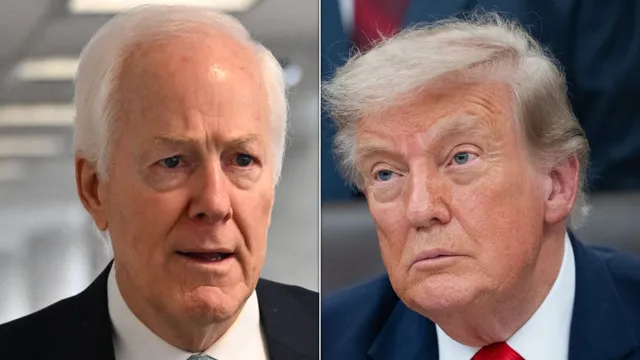
In the United States, Senator John Cornyn (R-Texas) has recently been at the center of political speculation following his decision to not seek reelection. This decision has led to questions about his independence from former President Donald Trump, especially after he was primaried out by a candidate supported by Trump. On a Wednesday, Cornyn, along with Senator Thom Tillis (R-N.C.), expressed their discontent by withholding support for Todd Blanche's nomination as Trump's attorney general. This move was seen as a significant political statement, particularly given the context of their previous attempts to align with Trump.
The backdrop of this situation involves Cornyn's previous efforts to appease Trump in the lead-up to the primary election. Despite being described as a good man by Trump, Cornyn's lack of support during critical moments led to his downfall in the primary. Trump had suggested that Cornyn was upset with him for not endorsing him in a May runoff election against Texas Attorney General Ken Paxton, who was backed by Trump. This dynamic has created a rift between Cornyn and Trump, with Cornyn now seemingly using his remaining time in the Senate to assert his independence.
The Senate Judiciary Committee, where Cornyn serves, has postponed a vote on Blanche's nomination, indicating that the tensions between the committee members and the Trump administration are palpable. Cornyn and Tillis have also been vocal about their demands for written assurances from the administration regarding the allocation of funds, specifically the $1.8 billion anti-weaponization fund. Their actions reflect a broader dissatisfaction with the current administration's handling of key issues, particularly those affecting their home state of Texas.
As Cornyn approaches the end of his four-term run in the Senate, his recent actions may be viewed as a final stand against the influence of Trump within the Republican Party. The implications of his decisions could resonate beyond his tenure, potentially influencing the future direction of the party and its relationship with Trump. The ongoing political landscape in the U.S. remains fluid, and Cornyn's choices may serve as a bellwether for other Republican lawmakers navigating their own positions in relation to Trump and his supporters.