

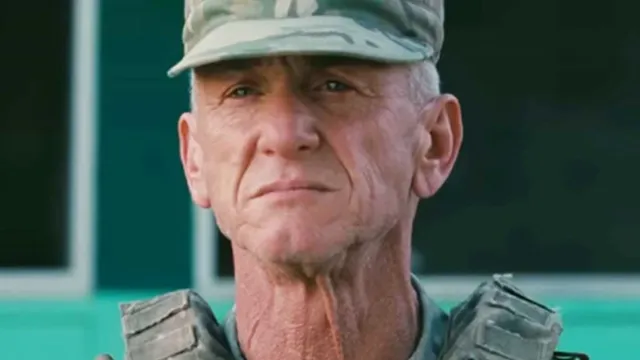
Sean Penn meets Zelensky in Ukraine to show support amid war
Sean Penn meets Zelensky in Ukraine to show support amid war
- Sean Penn traveled to Ukraine to meet President Volodymyr Zelensky and show support for the country amid ongoing conflict.
- His visit came just a day after winning an Oscar for his performance in 'One Battle After Another,' highlighting his commitment to Ukraine.
- This meeting signifies Penn's role as a steadfast ally for Ukraine, emphasizing the importance of solidarity in the face of adversity.
Story
In Ukraine, on March 16, 2026, Sean Penn visited to meet with President Volodymyr Zelensky in a show of solidarity during the ongoing conflict with Russia. This visit followed Penn’s Oscar win for 'One Battle After Another' on March 15, where he chose to forgo attendance at the ceremony to show his support for Ukraine instead. Over the months, Penn has become a prominent figure advocating for Ukraine, remaining a steadfast voice amidst waning celebrity activism following the invasion. He has expressed admiration for Zelensky's bravery and leadership, affirming the importance of supporting Ukraine as a symbol of democracy and principle. In their meeting, Zelensky acknowledged Penn's unwavering commitment to Ukraine since the onset of the full-scale war. Penn’s advocacy has included personal visits and participation in prominent events, such as posing with Ukrainian soldiers at the Cannes Film Festival alongside rock star Bono. His connections with the Ukrainian armed forces reflect a deep personal commitment to the country’s struggles, aimed at raising awareness among international audiences. The emergence of such alliances between celebrities and political figures is viewed as an essential narrative in contemporary discourse about global conflicts and humanitarian support. Prior to this visit, Penn co-directed a documentary highlighting Zelensky's evolution from comedian to wartime leader, showcasing the challenges faced by Ukraine. This film premiered at the Berlin Film Festival in 2023 and reinforces the narrative around Zelensky's transformative leadership in an era of crisis. Moreover, Penn's planned visits often draw media attention, serving as a platform for dialogue on democracy, freedom, and the resilience of the Ukrainian people amidst adversity. As the war continues, the role of public figures like Penn becomes increasingly significant in shaping perceptions about global solidarity with Ukraine. His actions encourage discussions on the relevance of celebrity involvement in political matters, motivating audiences to participate in advocacy and support efforts for those in need. Through his support, Penn emphasizes a broader call to action for individuals and nations to stand by democracy, illustrating the interconnectedness of global citizens as they navigate complex geopolitical landscapes.
Context
The impact of celebrity activism on the Ukraine war has been significant, as high-profile figures leverage their influence to draw global attention and mobilize support for humanitarian causes amid the ongoing conflict. Since the onset of the Ukraine war, many celebrities have utilized their platforms to raise awareness about the situation, share personal stories, and advocate for aid. This has facilitated an increased visibility of the plight faced by Ukrainian citizens, many of whom have been displaced, injured, or otherwise affected by the hostilities. Through social media campaigns, public statements, and fundraising efforts, celebrities have played an essential role in creating a narrative around the conflict that resonates with audiences worldwide, transforming political engagement into a mainstream topic of discussion. One of the key aspects of celebrity activism in this context has been the impact on fundraising for various organizations working on the ground in Ukraine. Celebrities have partnered with non-profit organizations to launch initiatives aimed at providing financial support for humanitarian relief, medical assistance, and refugee services. Events like benefit concerts and online donation drives have generated millions of dollars, showcasing how the partnership between celebrity influence and charitable organizations can drive substantial contributions to aid efforts. This intersection of fame and philanthropy has not only raised funds but has also encouraged ordinary people to get involved, demonstrating the power of individual contributions in times of crisis. Another dimension to the influence of celebrity activism is its potential to shape public opinion and political discourse. Celebrities can engage audiences that may not be typically involved in international issues, creating a broader interest in foreign policy and humanitarian crises. Through personal narratives, evocative imagery, and powerful messages, these public figures can evoke empathy and a sense of responsibility among followers. Consequently, this can lead to increased advocacy for government actions, such as sanctions against aggressors or enhanced support for military and humanitarian efforts. The ripple effect of this activism can create a sense of urgency that pressures policymakers to respond more promptly to crises. However, celebrity activism is not without its criticism. Some detractors argue that such initiatives can sometimes be superficial or driven by self-interest rather than genuine concern for the affected communities. Others highlight the potential for oversimplification of complex issues, leading to misinforming the public about the realities on the ground. Moreover, there is a concern regarding the sustainability of celebrity-led efforts; once the initial news cycle fades, the ongoing needs of those affected by conflict may fall out of focus. Regardless of these criticisms, the power of celebrity activism remains undeniable, serving both to galvanize support for Ukraine and to drive home the message that global solidarity and humanitarian aid are vital amidst the suffering caused by war.


