

Councils challenge approval of UK's largest solar farm
Councils challenge approval of UK's largest solar farm
- In April 2026, the UK government approved the plans for Springwell Solar Farm, expected to power 180,000 homes.
- Local councils, Lincolnshire County Council and North Kesteven District Council, are initiating a judicial review due to concerns about the project's impact.
- The councils believe that action is necessary to protect the interests of their residents despite potential costs.
Story
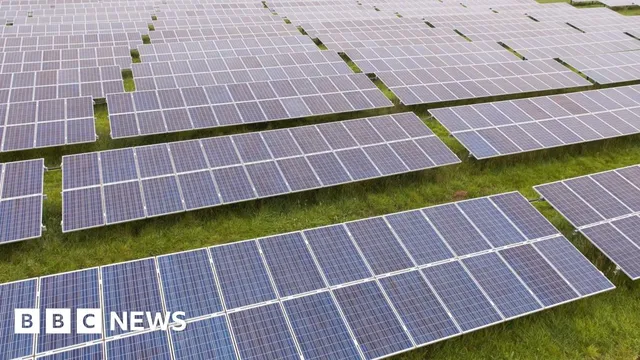
In April 2026, the UK government approved plans for Springwell Solar Farm, which is designed to be the largest solar installation in the country, situated between Lincoln and Sleaford. This development, covering an area of 1,280 hectares, was expected to generate power for approximately 180,000 homes while integrating a battery storage facility. The decision aimed to enhance energy security and reduce reliance on volatile fossil fuel markets in light of rising energy prices. However, the approval faced opposition from local councils, precipitating a move towards a possible judicial review. Councillor Sean Matthews of Lincolnshire County Council emphasized the importance of approaching the High Court after expressing concerns about how planning decisions were made. The councils highlighted issues tied to the impact of this large-scale project on rural landscapes and nearby communities, arguing that the government's decision was contrary to sound decision-making principles. The public inquiry preceding the approval had raised several local contentions which remain unaddressed. The developer, EDF, has committed to collaborating with local communities to mitigate any adverse effects during construction. Despite government assertions about increasing solar investment and generating clean energy, local leaders believe that legal action is necessary to address potential issues arising from the solar farm's development. Councillor Richard Wright from North Kesteven District Council mentioned that not pursuing this action would not serve the interests of residents. As this situation continues to unfold, the councils prepare for a judicial process, aiming for a thorough examination of the legality surrounding the approval of the Springwell Solar Farm. If accepted by the High Court, the judicial review could lead to significant implications for renewable energy initiatives in rural areas.
Context
The impact of solar farms on rural communities in the UK has emerged as a crucial topic of discussion as the country strives to transition to renewable energy sources. Solar farms are increasingly seen as a viable solution to meet energy demands while reducing carbon emissions. However, the implications of these developments on local communities are multifaceted, encompassing economic, environmental, and social aspects. This report aims to examine the various dimensions of solar farms and their effects on rural areas, incorporating both positive contributions and potential challenges faced by these communities. Economically, solar farms can provide significant benefits to rural areas. They create jobs during the installation and maintenance phases, predominantly in regions that may have limited employment opportunities. Furthermore, solar farms can lead to increased revenue for local Governments through business rates and other taxation methods. This influx of funds can be utilized for crucial community projects and infrastructure improvements, ultimately contributing to the overall development and sustainability of rural areas. However, it is essential to balance these economic benefits against potential drawbacks such as land use changes, which may impact traditional agricultural practices. Environmentally, the establishment of solar farms offers the prospect of reduced reliance on fossil fuels, aligning with national and global climate goals. Solar energy contributes to lower greenhouse gas emissions and can help combat climate change, which is particularly relevant for rural regions vulnerable to the extreme impacts of climate phenomena. Nonetheless, the deployment of solar farms must be undertaken with careful consideration to ensure that local ecosystems are preserved and that biodiversity is not adversely affected. Community engagement is vital to address any environmental concerns arising from solar farm projects, fostering a collaborative approach to development and resource management. Socially, the introduction of solar farms can have diverse impacts on rural communities, often eliciting mixed reactions. While many residents may welcome the economic advantages and environmental benefits associated with renewable energy, others may have concerns regarding the visual impact of solar panels on the landscape and potential disruptions caused during construction. Consequently, successful implementation of solar projects necessitates thorough community consultations to gauge opinions and ensure that developments align with local values and priorities. By addressing concerns and emphasizing transparent communication, renewable energy initiatives can be better integrated into rural communities, resulting in collective advantages that support the goals of sustainability and resilience in the face of climate change.


