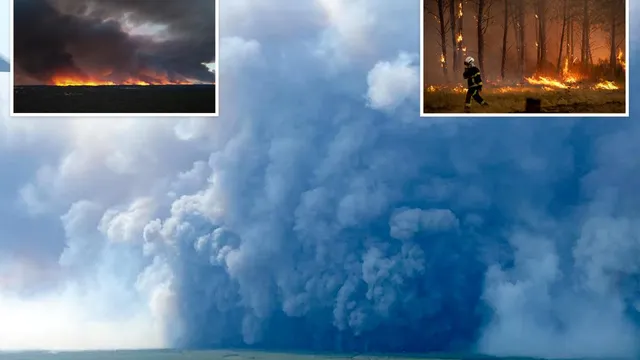
Fire clouds, also known as pyrocumulus clouds, are a significant meteorological phenomenon that can greatly influence the behavior and intensity of wildfires. These clouds form when intense heat from a wildfire causes moisture in the atmosphere to rise rapidly, leading to the condensation of water vapor and the formation of cumulus clouds. The presence of fire clouds can indicate extreme fire behavior, as they are often associated with strong updrafts and turbulent air, which can lead to the rapid spread of flames and the development of fire whirls. Understanding the dynamics of fire clouds is crucial for predicting wildfire behavior and implementing effective firefighting strategies.
The interaction between fire clouds and wildfires is complex. As fire clouds develop, they can create their own weather systems, including strong winds and lightning, which can further exacerbate fire conditions. The winds generated by these clouds can push flames in unpredictable directions, making it challenging for firefighters to contain the blaze. Additionally, the lightning produced by pyrocumulus clouds can ignite new fires, leading to a rapid escalation of the wildfire situation. This feedback loop between fire clouds and wildfires underscores the importance of monitoring these phenomena during fire events.
Moreover, fire clouds can have significant implications for air quality and public health. The smoke and particulate matter released during wildfires can be trapped within these clouds, leading to the formation of hazardous air quality conditions. As fire clouds rise, they can transport smoke over long distances, affecting communities far from the fire's origin. This can result in respiratory issues and other health problems for individuals exposed to the smoke. Therefore, understanding the behavior of fire clouds is not only vital for firefighting efforts but also for protecting public health and safety.
In conclusion, fire clouds play a critical role in the dynamics of wildfires, influencing their behavior, intensity, and the associated risks to both the environment and human health. As climate change continues to alter weather patterns and increase the frequency of extreme fire events, the study of fire clouds becomes increasingly important. Researchers and firefighting agencies must prioritize the monitoring and understanding of these clouds to improve wildfire management strategies and mitigate their impacts on communities and ecosystems.