

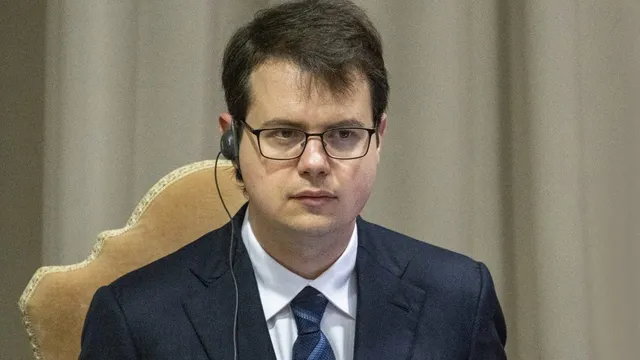
Chris Olah urges AI industry to prioritize moral obligations
Chris Olah urges AI industry to prioritize moral obligations
- Chris Olah, cofounder of Anthropic, spoke at the Vatican about the ethical responsibilities of AI companies.
- He emphasized the need for external supervision from critics to ensure moral obligations are met.
- Olah's comments reflect a growing concern over the ethical implications of AI technology.
Story
In a recent presentation at the Vatican, Chris Olah, a cofounder of Anthropic and a leading AI safety researcher, discussed the ethical responsibilities of AI companies. Raised in Toronto, Canada, Olah transitioned from being a devout evangelical Christian to an atheist at the age of 15. He later dropped out of the University of Toronto and received a Thiel Fellowship in 2012, which allowed him to pursue his interests in AI. His work has significantly contributed to the understanding of neural networks, particularly during his time at Google and OpenAI, where he led the interpretability team. During his remarks at the Vatican, Olah emphasized the importance of AI companies adhering to ethical standards while navigating the complexities of innovation and profitability. He acknowledged the inherent pressures that come from geopolitical influences and the need for companies to remain committed to doing the right thing. Olah's presence alongside Pope Leo XIV highlighted the growing concern over the moral implications of AI technology and the necessity for external oversight from critics, including religious institutions, scholars, and governments. Olah's views contrast sharply with those of other industry figures, such as Marc Andreessen, who has criticized the focus on trust and safety in technology as a demoralization campaign. Despite differing opinions within the industry, Olah's stance aligns with Anthropic's mission, which prioritizes safety and the responsible development of AI. His work in mechanistic interpretability aims to reverse-engineer AI models to better understand their decision-making processes and ensure their safety. In recognition of his contributions to the field, Time magazine included Olah in its TIME100 AI list of the most influential people in the AI industry in 2024. He believes that a deeper understanding of AI systems is crucial for determining their safety and addressing the potential risks they pose. Olah's call for moral oversight in the AI industry reflects a growing awareness of the ethical challenges that accompany rapid technological advancements.


