

Translation tool helps users master LinkedIn speak
Translation tool helps users master LinkedIn speak
- LinkedIn has developed a unique communication style known as 'LinkedIn Speak,' which often obscures true sentiments.
- A translation tool has been created to help users convey everyday situations using this complex jargon.
- While the tool aids in crafting appropriate messages, it may contribute to the pressure of maintaining an idealized professional image.
Story
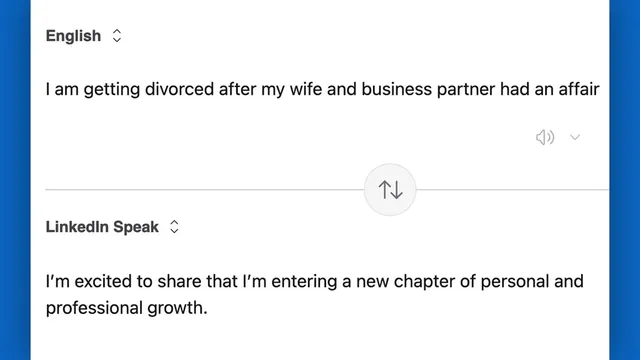
In recent months, LinkedIn has become a platform where individuals often showcase their lives with a unique form of communication dubbed 'LinkedIn Speak.' This style entails a combination of jargon and euphemism that allows users to present ordinary situations in a polished, corporate manner. Though effective in enhancing one’s professional image, writing in this language can be challenging and often comes across as insincere to those unacquainted with it. To address the complexities of this communication style, a new translation tool has been developed, specifically designed to transform plain statements into LinkedIn-friendly language. For instance, a simple admission of personal difficulties, such as experiencing a divorce, can be reframed into a message of excitement and growth. This highlights not only a personal transformation but also reflects an aspirational state, which many users feel is necessary to maintain credibility on the platform. The translation tool aims to make it easier for individuals to engage with LinkedIn's culture by simplifying the process of creating posts that fit the site's standards of professionalism and positivity. The language produced by this tool is characterized as relentlessly optimistic, often masking underlying issues with euphemisms that cater to the prevailing company culture. Nonetheless, for the average user who is simply seeking employment, the tool may present a challenge, as the exaggerations and convoluted phrases can obscure their genuine intentions. The highlighted need for such a tool underscores the pressures of maintaining a facade of success in a network that thrives on image and perception. Ultimately, while it allows users to join the LinkedIn conversation with more ease, it also perpetuates the cycle of humblebragging that defines the platform's interactions.


