

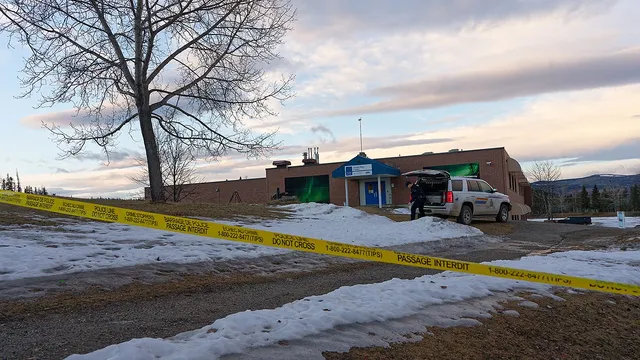
Transgender shooter kills nine in devastating school attack
Transgender shooter kills nine in devastating school attack
- An active shooter incident occurred on February 10, 2026, at Tumbler Ridge Secondary School in British Columbia, Canada.
- The shooter was identified as an 18-year-old transgender woman who allegedly killed family members before targeting the school.
- The incident left at least nine dead and prompted national discussions on mental health and gun control.
Story
On a tragic day, February 10, 2026, a mass shooting took place at Tumbler Ridge Secondary School in British Columbia, Canada. The Royal Canadian Mounted Police (RCMP) confirmed that the attacker, an 18-year-old transgender woman, identified as Van Rootselaar, had a troubling history of mental health issues and prior contact with law enforcement. The horrific rampage resulted in the deaths of at least nine individuals, including six victims at the school, while two others were found dead at the suspect's residence. The situation unfolded as police received reports of an active shooter around 1:20 p.m. local time, leading to a swift response from law enforcement and emergency services. In a devastating sequence of events, Van Rootselaar allegedly began her violent actions by fatally shooting her mother and 11-year-old step-brother in their home before heading to the school. Once on the school grounds, she opened fire, claiming the lives of a 39-year-old female educator, three female students aged 12, and two male students aged 12 and 13. The RCMP thoroughly examined the crime scene and recovered two firearms, including a long gun and a modified handgun, although they were not registered to Van Rootselaar. These discoveries raised concerns regarding her access to weapons, as she previously held a firearms license that had expired in 2024. The aftermath of the incident led to an extensive police response, with approximately 25 individuals sustaining non-life-threatening injuries and receiving medical attention at a local facility. Tumbler Ridge's education community found itself enveloped in shock and mourning, and Superintendent Ken Floyd emphasized the importance of cooperation between law enforcement, emergency responders, and the schools in handling the crisis. Canadian Prime Minister Mark Carney expressed his devastation regarding the events, highlighting the broader implications of such violent occurrences within society. The RCMP quickly concluded that they did not believe additional suspects were involved in the shooting, nor was there a continued threat to the public. The tragedy prompted local officials and leaders to assure the community that support systems were being established to help those affected by the violence, illustrating the need for solidarity and healing in the face of such a profound loss. As the investigation progressed, the community and the nation reflected on yet another significant tragedy that raised discussions around gun control, mental health awareness, and violence in schools.
Context
School shootings are devastating events that profoundly impact not only the victims and their families but also the broader community in which they occur. The aftermath of such tragedies often leaves communities grappling with emotional scars, a diminished sense of safety, and a fractured social fabric. Survivors and witnesses may experience a range of psychological effects, including post-traumatic stress disorder (PTSD), anxiety, and depression. As the community processes the trauma, the events can lead to increased polarization and fear among residents, which may manifest in heightened security measures in schools and public spaces, as well as a general decline in community cohesion and trust. Furthermore, the economic implications of school shootings are significant. The affected communities frequently face loss of business due to decreased foot traffic, increased expenditure on mental health services, and possibly substantial costs associated with legal proceedings and security enhancements. The media portrayal of these tragedies can also cast a long shadow, leading to stigma that may deter people from moving into a neighborhood or cause reductions in property values. As resources are diverted to address new security concerns and mental health support, local governments and schools may struggle to maintain educational quality and public safety without adequate funding. In the aftermath, it is not uncommon for communities to engage in dialogue regarding gun regulations and mental health policies. Advocacy for changes in laws and procedures may emerge as citizens seek to prevent future incidents and promote a sense of security. This advocacy, however, can also lead to significant divisions within communities, particularly when contrasting views on gun control and safety measures come into play. Community forums, rallies, and discussions can become battlegrounds for deeply held beliefs, further complicating the community's healing process in the wake of violence. Despite these challenges, some communities find resilience through collective action. Many grassroots organizations work to provide support to those affected, promote healing, and foster dialogues around community safety and mental health awareness. Programs aimed at empowering students and educators to identify and report concerning behaviors, as well as initiatives that focus on building strong community ties, can mitigate the long-term effects of school shootings. Ultimately, while the impact of these tragedies is undeniably severe, they also highlight the capacity for communities to unite in the face of adversity and advocate for positive change.


