

Trump lashes out at Supreme Court over tariff ruling during State of the Union
Trump lashes out at Supreme Court over tariff ruling during State of the Union
- Just days before the address, the Supreme Court ruled against Trump's tariff policy by a 6-3 vote, limiting his trade authority.
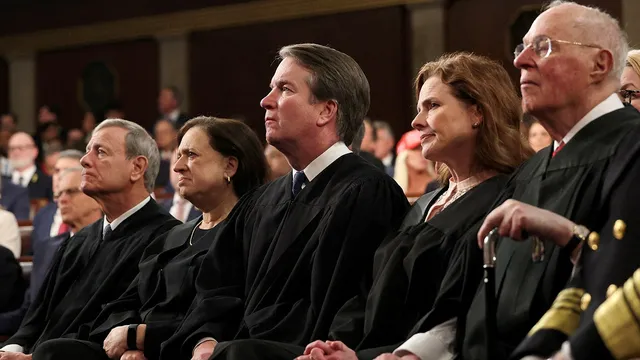
- Trump publicly criticized the justices during his State of the Union address, labeling their decision as unfortunate.
- The ongoing tension between the executive branch and the judiciary highlights the challenges faced by Trump's trade agenda.
Story
In the United States, President Donald Trump delivered his State of the Union address on an unspecified Tuesday, drawing attention for his sharp criticism of the Supreme Court justices present in the chamber. Just days earlier, the Supreme Court issued a 6-3 ruling invalidating many of Trump's tariffs, a significant blow to his trade policy. Chief Justice John Roberts authored the opinion that emphasized the court's determination to uphold congressional authority over tax-related matters, making it clear that the president could not unilaterally impose tariffs under the International Emergency Economic Powers Act. Many justices, including those critical of their ruling, attended the address, directly facing Trump’s comments. Trump's statements labeled the ruling as 'very unfortunate' and suggested it impinged on his administration's ability to generate revenue through tariffs. He insisted that the duties were beneficial for U.S. national security and economic strength, arguing that the revenue from the tariffs funded crucial domestic initiatives. Despite the Supreme Court's setback, Trump vowed to pursue alternative legal routes to maintain his tariffs. His ongoing interactions with the justices highlighted the often fraught relationship between the Executive and Judicial branches. In a further note of tension, Trump’s State of the Union included anticipated greetings with justices present, particularly Justice Amy Coney Barrett, amid recent criticisms he directed at her verdict on tariffs, which he deemed an embarrassment. As the speech unfolded, justices remained largely stoic, embodying their traditional approach of maintaining composure in the politically charged environment of such presidential addresses, despite Trump's pointed accusations directed at them. This incident underscores an ongoing narrative of tension between Trump's administration and legislative functions versus judicial review, particularly in the domain of trade and tariff laws. The aftermath of the address revealed varying reactions from within the Court, with some justices acknowledging that they expect public scrutiny and occasional criticism as part of their roles. The State of the Union and the subsequent conversations around it may shape future interactions between the branches of government, particularly in terms of public perception of judicial independence versus executive authority.
Context
The State of the Union address is a tradition that has evolved significantly since its inception. Required by the U.S. Constitution, the address is delivered annually by the President of the United States to a joint session of Congress. The first State of the Union address was given by George Washington in 1790, and it was more of a written report than a speech. Washington's addresses established the precedent for future presidents but were initially delivered in person only to Congress, rather than to the public at large. Thomas Jefferson, in response to the highly publicized events of Washington's time, chose to submit his address in writing, a practice that continued until Woodrow Wilson revived the tradition of delivering the address in person in 1913. This shift marked a new era of presidential communication, creating a platform through which the president could address not just Congress but also the American people directly. Over the years, the format and content of the State of the Union address have varied considerably, reflecting the political, social, and economic climate of the time. In the early 20th century, addresses began to incorporate broader rhetorical strategies, emphasizing key themes and national priorities. However, the structure remained conservative, often following a formal outline that included a review of the administration's accomplishments and the outlining of future goals. This formal structure has been manipulated by various presidents to suit their purposes, leading to significant political debate, especially when it comes to the presentation of domestic and foreign policies. More recently, the use of dramatic visuals and storytelling has become commonplace, with presidents using personal anecdotes and emotional appeals to engage a public audience. The State of the Union also serves as a significant political event, often setting the tone for the legislative agenda in Congress. Traditionally, the address is delivered in January or February, just after the new session of Congress begins. It is not only an opportunity for the president to inform Congress and the public about the state of the nation but also a moment for political posturing. Opposition parties often utilize the immediate response time to critique the president’s policies, highlighting areas of disagreement and proposing alternative views. Additionally, the address is an opportunity for the president to rally support for new initiatives while managing public expectations regarding ongoing challenges. In the modern era, technology and media have transformed how the State of the Union is received by an audience. The growing influence of television and the internet has allowed the address to reach millions of viewers in real-time, creating a platform for immediate discussion and reaction across various media channels. Social media has further amplified this effect, enabling viewers to engage in simultaneous commentary and analysis, thereby influencing public opinion instantaneously. As the nation continues to evolve, so too will the State of the Union address, standing as a reflection of the political environment and the ever-changing relationship between the presidency and the American public.


