

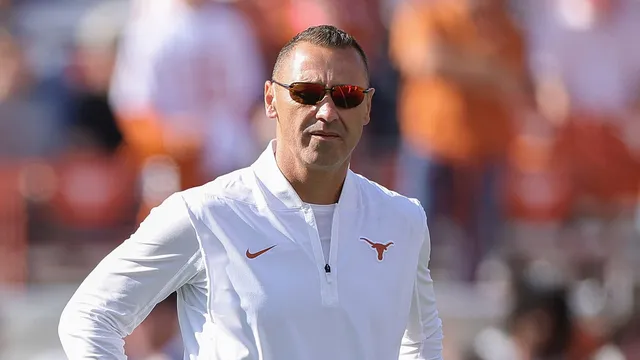
Steve Sarkisian questions NCAA's lack of regulation on college football agents
Steve Sarkisian questions NCAA's lack of regulation on college football agents
- Steve Sarkisian is addressing the complexity of recruitment impacted by NIL agreements.
- He emphasizes the lack of regulation and certification for agents negotiating NIL deals.
- Both Sarkisian and Calipari are advocating for reforms to strengthen oversight in college sports.
Story
In the United States, the landscape of college sports has drastically transformed due to the introduction of name, image, and likeness (NIL) agreements, which have become a significant factor in recruitment strategies. Texas Longhorns head football coach Steve Sarkisian is currently preparing for the Cheez-It Citrus Bowl against the Michigan Wolverines while simultaneously engaging in recruitment efforts for the upcoming 2026 season. Sarkisian's team faces the complex dynamics of today's recruitment landscape, necessitated by the financial motivation resulting from NIL deals, which have turned the process into a more commercial endeavor than it has ever been before. One of the major concerns raised by Sarkisian is the absence of a formal certification process for agents, who are now capable of negotiating lucrative contracts for student-athletes without oversight of their qualifications. He pointed out that some agents may not be properly licensed or even experienced, leading to the possibility that a player's college roommate could take on the agent role, ultimately placing young athletes' futures in jeopardy. This lack of regulatory framework restricts transparency and accountability in college sports, raising questions about the protections available for the athletes. Similarly, John Calipari, the head coach of the University of Kentucky men's basketball team, has echoed similar frustrations regarding the chaotic nature of college basketball in light of NIL and player transfers. Calipari denounced the current system for allowing former NBA players and older prospects to compete alongside high school recruits, arguing that it contributes to a disparity that adversely affects younger athletes. As college sports navigate these uncharted territories marked by rapid changes and financial incentives, both Sarkisian and Calipari are calling for reform and a clearer set of guidelines from the NCAA to address the evolving practices in recruitment, financial agreements, and agent involvement. The challenges posed by this new era continue to call into question the integrity of collegiate athletics and how they prioritize the development and well-being of their student-athletes.


