

Major-General Jeffers outlines deployment plans for peacekeeping forces in Gaza
Major-General Jeffers outlines deployment plans for peacekeeping forces in Gaza
- Troops from Indonesia, Morocco, Kazakhstan, Kosovo, and Albania are prepared to deploy to Gaza.
- The International Stabilization Force aims to train Palestinian police and stabilize the region.
- The Board of Peace has committed significant resources toward rebuilding Gaza and establishing a sustainable peace.
Story
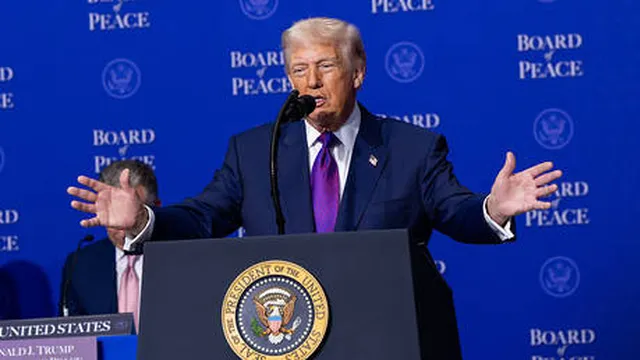
In February 2026, during the inaugural Board of Peace meeting in Washington, US Major-General Jasper Jeffers announced that peacekeeping forces from Indonesia, Morocco, Kazakhstan, Kosovo, and Albania are set to be deployed to the Gaza Strip. This meeting marked the first significant step in the implementation of Trump's Gaza peace roadmap, which aims to stabilize the region. The plan includes initial deployment to the Rafah sector while training the Palestinian police, with a midterm objective to expand the forces across the enclave. The proposed International Stabilization Force (ISF) will eventually consist of 20,000 soldiers, along with a target of training 12,000 Palestinian police officers. This ambitious initiative flows from an urgent need to rebuild and stabilize Gaza, which has suffered extensive damage due to ongoing conflict. The Board of Peace, formally established earlier in mid-January, has garnered support from about 26 founding members who attended this meeting. In addition to military assistance, the financial dimensions were highlighted, as CEO Marc Rowan of Apollo Global Management pledged to spearhead the reconstruction of 100,000 homes in Rafah city, ultimately housing around 500,000 residents. This stark commitment reflects an acknowledgment of the humanitarian crisis in Gaza and the necessity for international support to rebuild war-torn neighborhoods. The broader goal includes constructing an additional 400,000 homes in other regions across Gaza over time. Such initiatives underscore a growing consensus within the international community to tackle the profound challenges faced in this conflict-affected area, thus committing significant financial and human resources toward reconstruction and peacekeeping efforts. However, the complexity of the socio-political landscape in the region raises questions about the feasibility and sustainability of these plans, especially concerning community buy-in and long-term stability.


