

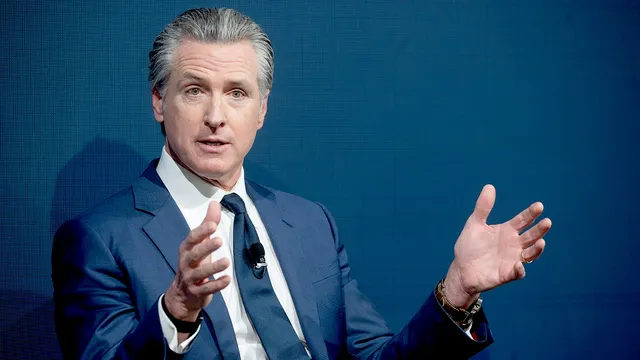
Gavin Newsom urges Democrats to adopt culturally normal stance on trans athletes
Gavin Newsom urges Democrats to adopt culturally normal stance on trans athletes
- Governor Gavin Newsom stated that the Democratic Party must adopt a more culturally normal approach to attract voters.
- He cited the need to focus on pressing economic concerns over identity politics and transgender athlete participation.
- Newsom's comments reflect ongoing debates within the party regarding how to address social issues without alienating voters.
Story
In a recent CNN interview, California Governor Gavin Newsom discussed the strategies he believes the Democratic Party should adopt to resonate with voters, particularly regarding the issue of transgender athletes in women's sports. He stated that the party must become 'more culturally normal' and shift focus away from discussions on pronouns and identity politics, instead addressing pressing economic issues such as housing costs, childcare, and electricity bills. Newsom's comments reflect a broader concern about the political landscape as he positions himself for potential presidential candidacy in 2028, emphasizing the need for nuanced discussions around contentious social topics. In his statements, Newsom acknowledged facing backlash from his own party for what some view as a moderate approach to transgender issues, especially in light of ongoing debates about biological males competing in female sports. He insisted that advocating for a thoughtful dialogue does not undermine his support for the transgender community. By being more sensitive in addressing these matters, Newsom believes Democrats can avoid alienating segments of the electorate who feel left out of the conversation regarding transgender participation in sports. Alongside Newsom, Chad Bianco, a sheriff and gubernatorial candidate, has similarly criticized California's approach to transgender athletes and described the state leadership as failing to adequately address pressing issues such as homelessness and sports policies. Bianco has proposed a more forceful approach as governor to protect girls' sports, suggesting potential consequences for schools that comply with laws allowing trans athletes to compete in women's categories. He claims that the state's current policy creates significant challenges for young female athletes. Both leaders, albeit with differing perspectives, underscore the contentious nature of the ongoing political discourse surrounding transgender policies. As California navigates lawsuits concerning its approach to these issues, the contrasting views highlight a state grappling with balancing advocacy and equity in sports. Newsom's assertions of a need for a cultural recalibration may shape his political strategy and the Democratic Party's future engagement with these complex social issues in the context of competitive elections.


